Solar Lights vs Low Voltage: Cost, Brightness, and Installation Compared
Deciding between solar lights vs low voltage landscape lighting comes down to one question: do you want a system you can install in an afternoon for almost nothing, or one that delivers brighter, more reliable light night after night? Both options light up paths, patios, and garden beds in different ways, and the right answer depends on your yard, your budget, and how much light you actually need.
Solar fixtures charge during the day and switch on automatically at dusk. They cost little up front and need zero wiring, but their output drops hard in shade, winter, and after a few cloudy days. A low-voltage system runs on 12-volt current from a transformer plugged into a standard outlet, so every light gets steady power regardless of the weather. The trade-off is a higher installation bill and a buried cable you have to plan around.
This guide breaks down solar lights vs low voltage across the factors that matter most: upfront cost, installation effort, brightness, and what you’ll spend over the life of each system. By the end, you’ll know exactly which one fits your property.
How Solar Lights Work
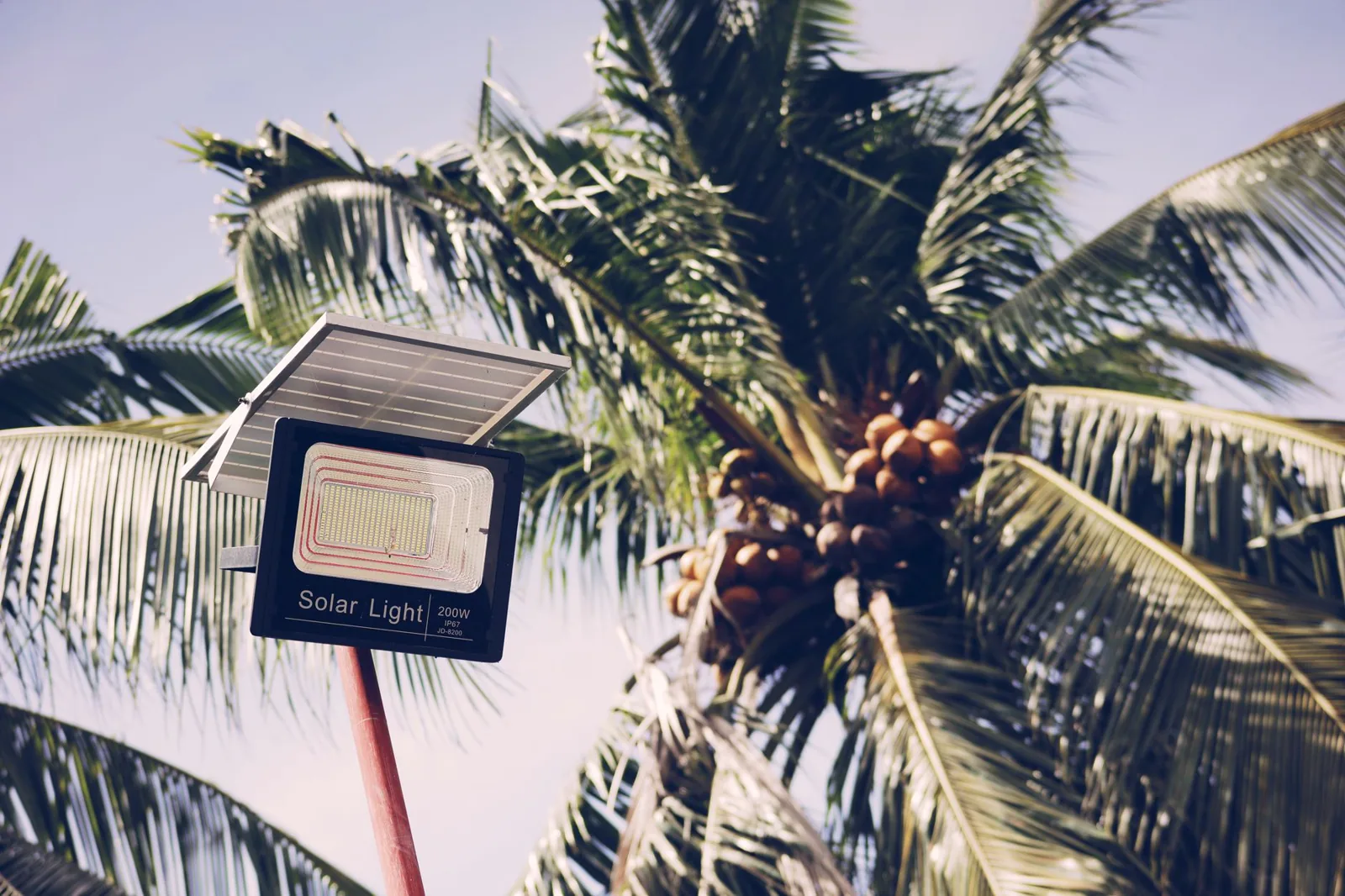
Solar landscape lights are self-contained units. Each fixture holds a small photovoltaic panel, a rechargeable battery (usually nickel-metal hydride or a lithium-ion cell), and an LED bulb. During the day the panel charges the battery; a built-in photocell reads the light level and flips the LED on at dusk, then draws from the battery until it runs out.
That simple design is both the appeal and the limitation. There’s no transformer, no cable, and no electrician involved — you push a stake into the ground and move on. But the output is capped by how much sun the panel caught that day and how big the battery is. Most retail solar path lights keep their full brightness for only 4 to 6 hours before dimming noticeably, and cheaper models can fade well before midnight.
Battery life is a hidden cost. NiMH cells in budget fixtures typically hold up for 1 to 2 years of daily cycling before they stop holding a charge; lithium-ion models last 3 to 5 years. Batteries are replaceable on better units, but on the cheapest lights the whole fixture is effectively disposable once the cell dies.
How Low-Voltage Landscape Lighting Works
Low-voltage lighting converts standard 120-volt house current down to a safe 12 volts through a transformer, then sends that low voltage out to every fixture over a buried cable. Because 12 volts poses little shock risk, homeowners can bury the wire in a shallow trench — usually 3 to 6 inches — without a licensed electrician or a permit in most areas.
The transformer plugs into a covered outdoor outlet and comes in wattage ratings that determine how many lights you can run on one circuit. A typical 60-watt transformer supports roughly 9 to 12 LED path or spot lights; larger setups use a 200-watt or 300-watt unit. If you’re planning a bigger project, it’s worth reading up on how to size a landscape lighting transformer before you buy, because an undersized transformer will cause flickering and shortened bulb life.
The key advantage is consistency. Every fixture receives the same 12 volts whenever the timer or photocell turns the system on, so brightness doesn’t sag as the night goes on or after a string of overcast days.
Solar Lights vs Low Voltage: Head-to-Head Comparison
The quickest way to weigh solar lights vs low voltage is side by side. Here’s how the two systems stack up on the things homeowners care about most.
| Feature | Solar Lights | Low-Voltage Lights |
|---|---|---|
| Upfront cost | $10–$60 per fixture | $20–$80 per fixture, plus $50–$250 for a transformer and cable |
| Installation | Minutes, no wiring | Half-day to full weekend; requires trenching cable |
| Brightness (lumens) | 5–100 per fixture | 50–600+ per fixture |
| Light duration | 4–8 hours, weather-dependent | Full run time whenever powered |
| Shade performance | Poor — needs direct sun | Unaffected by shade |
| Operating cost | $0 (solar) | Roughly $30–$60 per year in electricity |
| Maintenance | Battery replacement every 1–5 years | Occasional bulb and connection cleanup |
| Best for | Paths, accents, renters, small budgets | Security, driveways, whole-yard design |
On raw light output, low voltage wins almost every time. A single $40 low-voltage spot light can throw 300 to 500 lumens, while even a good solar path light tops out around 30 to 50 lumens. For accent lighting that’s plenty. For actually lighting up a driveway or a dark side yard, it isn’t close.
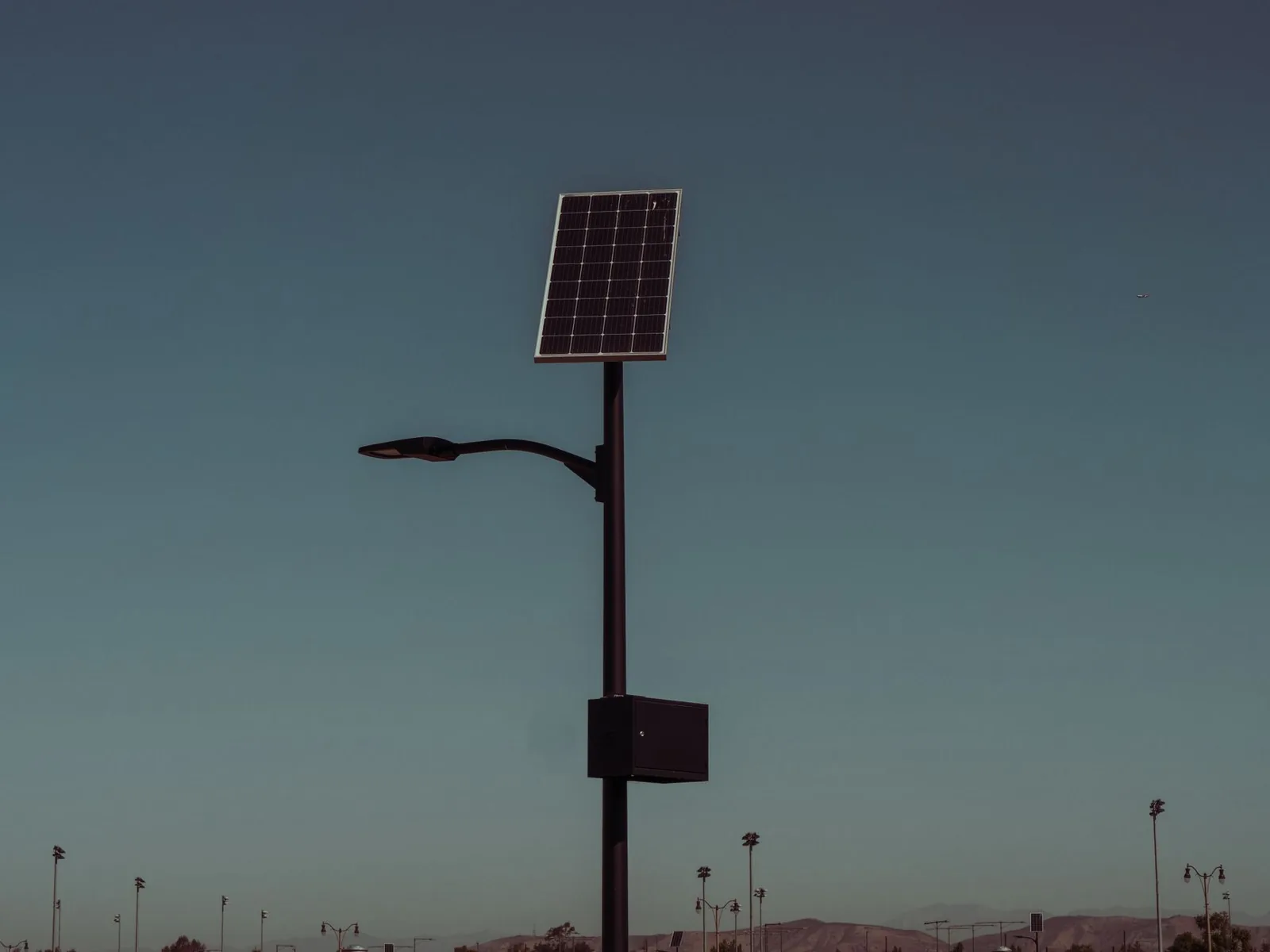
Photo by Kindel Media via Pexels
Upfront Cost and Installation
Solar lights are the clear winner on entry price. A six-pack of decent solar path lights runs $30 to $60 at Home Depot or Lowe’s, and a set of solar spotlights costs about the same. You can light a short walkway for under $100 and finish the job in the time it takes to drink a cup of coffee.
Low-voltage lighting costs more to buy and much more to install. A starter kit with a transformer, 100 feet of cable, and six LED path lights typically lands between $150 and $350. If you hire a pro to design and install a full system, expect to pay $2,000 to $5,000 for a typical 10- to 20-fixture project — and more if trenching through hard soil, pavers, or a large lawn. The detailed price breakdown in our low-voltage lighting cost guide walks through every line item.
There’s also a whole-yard cost angle. If you’re lighting 20 or 30 fixtures across a large property, the transformer, cable, and labor add up fast, which is why the landscape lighting cost article recommends defining your zones first so you don’t over-buy fixtures.
Installation effort goes decisively to solar. Low-voltage means running cable, burying it, and hiding the transformer — a full afternoon of work even for a handy DIYer, and a weekend for a larger yard with existing landscaping you don’t want to disturb.
Brightness, Color, and Coverage
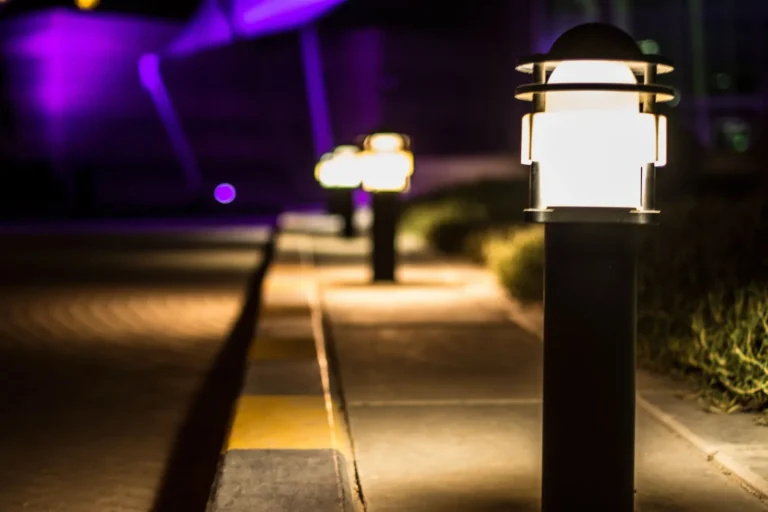
Low-voltage lighting wins on brightness and control. You can pick from path lights, spotlights, well lights, wash lights, and hardscape lights, each with a specific spread and lumen output. Warmer 2700K bulbs read as soft and natural against brick and stone, while 4000K bulbs lean brighter and more clinical — useful over a cooking or work area. You get dimmers, timers, and full control over exactly where the light falls.
Solar lights are far more limited. Most use small integrated LEDs with a fixed spread, and color temperature is usually locked at a cool 6000K that can look faintly blue against warm house lights. If you’ve ever noticed a solar path light looking almost clinical next to your porch sconce, the color temperature mismatch is why.
One common mistake is expecting solar fixtures to cover large areas. A single solar spotlight won’t flood a 30-foot driveway or light up a big tree the way a dedicated 12-volt uplight can. Solar is about accent — marking edges, highlighting a planter, guiding the walk to the door. For real illumination and coverage, low voltage is the tool.
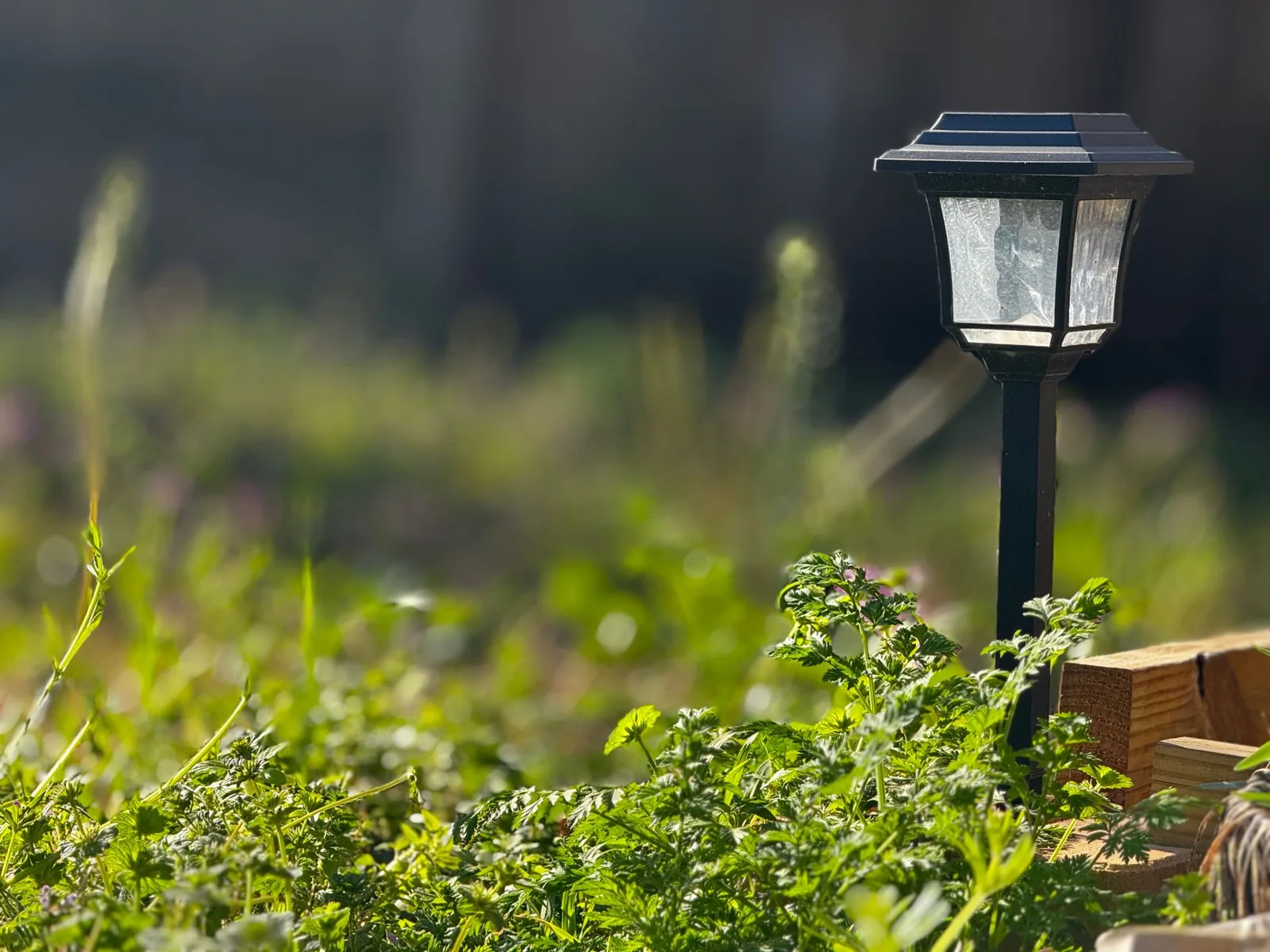
Photo by Amy k via Pexels
Long-Term Cost: Energy and Maintenance
Solar costs nothing to run. The panels convert sunlight for free, so your yearly operating cost is zero. Over a 10-year span, a typical solar path light system will need its batteries replaced two or three times, at $5 to $15 per fixture per swap — call it $30 to $100 total for a small set, plus replacing any fixtures whose panels and housings yellow and crack in the sun.
Low-voltage electricity use is modest but real. A six-light LED system drawing around 30 watts total and running 6 hours a night uses about 66 kilowatt-hours per year. At the US average of roughly $0.16 to $0.17 per kilowatt-hour, that’s around $10 to $12 a year — a little more if you run the lights all night or add more fixtures. Over a decade you’re looking at $100 to $150 in electricity, which is a rounding error next to the installation cost.
The bigger maintenance point is reliability. A well-installed low-voltage system with LED bulbs and waterproof wire-nut connections can run for 10 years or more with almost no attention beyond cleaning lenses and occasionally re-seating a connector. Solar systems degrade on a shorter clock — batteries fail every few years, and the plastic housings on budget models break down under UV exposure. The cheapest solar lights often need replacing outright every 2 to 3 years.
Which One Should You Choose?
The honest answer is that most yards benefit from both, used for different jobs. Here’s a practical way to decide.
Choose solar lights if you:
- Have a small project — a walkway, a few flower beds, or a patio border
- Want to avoid wiring entirely or rent a home where you can’t trench
- Live somewhere with strong, consistent sun most of the year
- Want accent lighting rather than bright, functional light
Choose low-voltage lighting if you:
- Need real brightness for a driveway, stairs, or a security zone
- Have a shaded or north-facing yard where solar panels underperform
- Want to light a large area or a cohesive, professionally designed landscape
- Plan to stay in the home long enough to justify the installation cost
If you’re tackling a full backyard and want design ideas that pair well with either system, our roundup of landscape lighting ideas for a backyard shows how the same space looks with path lights, uplights, and string lights layered together.
Frequently Asked Questions
Are solar lights brighter than low voltage lights?
No. Low-voltage LED fixtures typically produce 50 to 600 lumens, while solar fixtures usually range from 5 to 100 lumens. Low voltage is the better choice when you need genuine illumination, and solar is fine for gentle accent and pathway marking.
Do solar lights work in winter or cloudy weather?
They work, but dimly. Solar panels produce far less charge on short, overcast winter days, so run time drops and brightness fades earlier in the evening. Low-voltage lights are unaffected by weather, which is a major reason homeowners in cloudy climates choose them.
How much does a low-voltage lighting system cost to run?
Very little. A typical six-light LED system consuming around 30 watts for 6 hours a night uses roughly 66 kilowatt-hours a year, which works out to about $10 to $12 annually at average US electricity rates. Solar lights cost nothing to operate.
Can I add low-voltage lights to my current system later?
Yes, so long as your transformer has spare capacity. Each LED fixture draws only a few watts, so a 60-watt transformer can often support more lights than a kit includes. Just don’t exceed the transformer’s rated wattage or the lights will flicker and the system may shut down.
How long do solar landscape lights last?
The LED itself can last a decade, but the battery usually needs replacing every 1 to 5 years depending on whether it’s a nickel-metal hydride or lithium-ion cell. Housing and panels on budget fixtures often degrade within 2 to 3 years.
For a side-by-side comparison, Family Handyman compares solar vs. low-voltage lighting.
The Bottom Line
Solar lights vs low voltage isn’t really a contest where one side wins outright — it’s a question of what you’re trying to light. For a fast, cheap glow along a walkway or around a planter, solar is tough to beat: you’ll be done in an afternoon for well under $100 and pay nothing to run it. For bright, dependable light across a driveway, a big yard, or a shady property, low voltage is the better investment, and its modest electricity use and long lifespan make the higher upfront cost easier to justify.
As a rule of thumb, start with solar when the goal is accent and budget is tight, and move to low voltage when the goal is actual illumination or safety. Whichever direction you go, getting the transformer, wiring, and fixture placement right matters more than the brand. For a deeper look at the numbers before you commit, check the low-voltage lighting cost breakdown, and if you’re sizing a system, review our landscape lighting transformer guide for help choosing the right wattage.