Landscape Lighting Ideas for Front of House
A well-lit front yard does more than help you find the door after dark. It changes how your home reads from the street, makes visitors feel welcome, and is one of the few exterior upgrades that improves both resale value and everyday safety at the same time. The best landscape lighting ideas for front of house are the ones that work quietly in layers — a soft wash on the facade, a clear path to the entry, and a few focused accents on the trees and plantings you’re proud of.
Most homeowners overthink this. You don’t need dozens of fixtures or a lighting designer’s budget. A handful of well-placed lights on the right transformer costs between $300 and $1,500 all in, and most of the work can be done over a weekend. Below are the ideas that deliver the most visual impact per dollar, organized so you can start from the driveway and work your way up to the front door.
Why Front-of-House Lighting Is Worth It
Front-yard lighting is the one upgrade neighbors notice from the curb every single evening, which is exactly why it outpaces most other exterior projects for resale. A 2022 survey by the National Association of Realtors found outdoor lighting ranked among the top features buyers want, and This Old House regularly lists exterior lighting as one of the highest-return curb appeal projects.
The practical case is just as strong. Lighting the walkway and entry reduces trips and falls after dark, and a house that’s lit at night is a less attractive target for a break-in. According to the U.S. Department of Energy, a modern LED landscape system can light a typical front yard for under a dollar a month in electricity — a fraction of what the old halogen systems drew.
Layer Your Light: Three Levels of Front-Yard Lighting
The single most common mistake is a row of identical path lights marching up the sidewalk and nothing else. That washes out the yard into a flat, stadium-like glow. Good front-yard lighting works in three overlapping layers.
Ambient (Overall) Light
Ambient light sets the base level so the front of the house doesn’t disappear into the dark. Wall-mounted sconces beside the door, a porch light, and a few well lights aimed up at the facade do most of this work. Think of it as the foundation the other two layers sit on.
Task Light
Task light is lighting with a job: illuminating the walkway, the stairs, the house number, and the area around the front door where people fumble for keys. Path lights, step lights, and a bright, downward-facing fixture at the entry fall into this layer.
Accent Light
Accent light is the “wow” layer. It’s the up-light on the maple tree, the silhouette behind the shrubs, and the gentle wash across stone or brick. Accent fixtures are the cheapest to add and do the most to make the front yard look designed rather than merely lit.
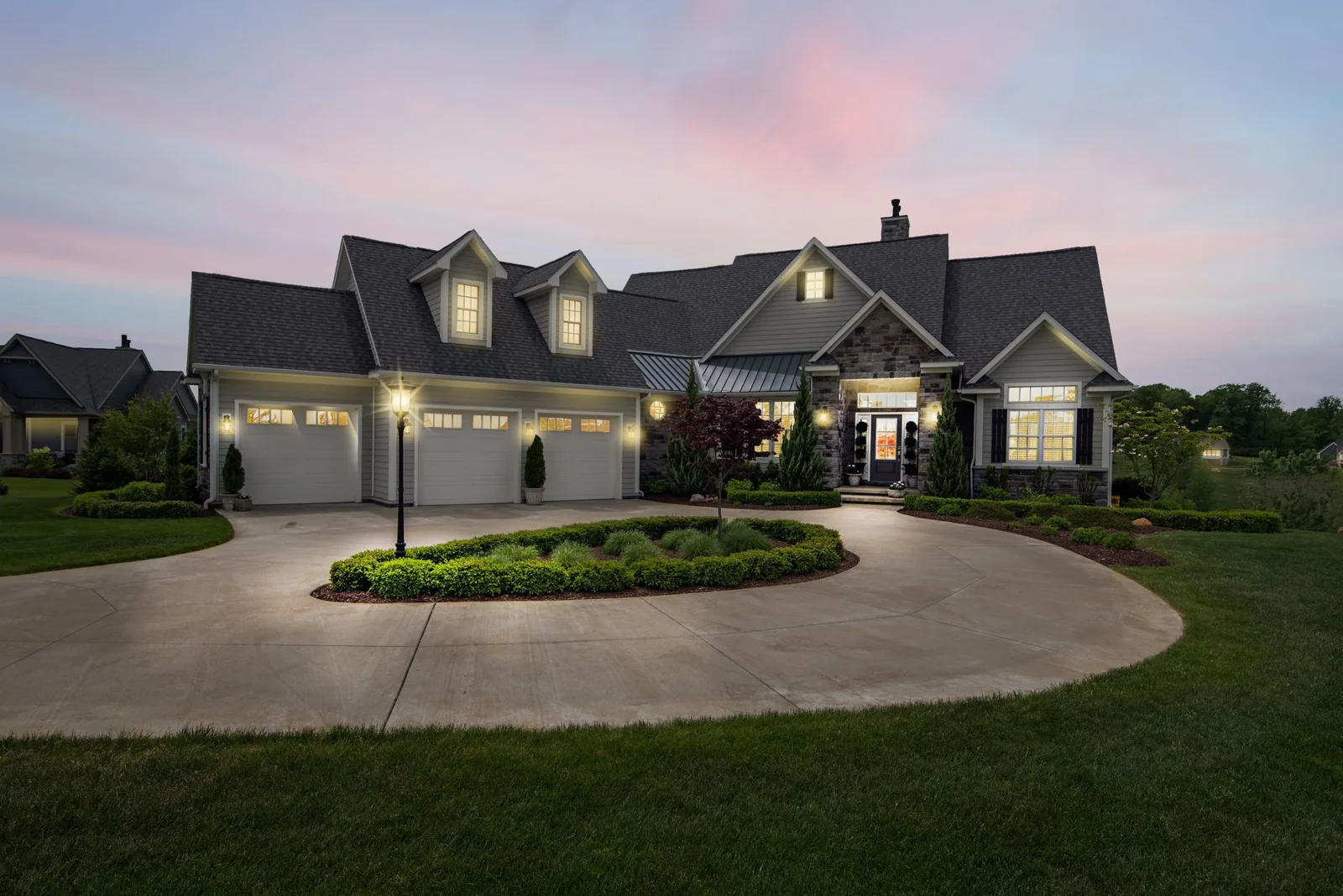
Photo by Deepak DK via Pexels
Path and Walkway Lighting Ideas
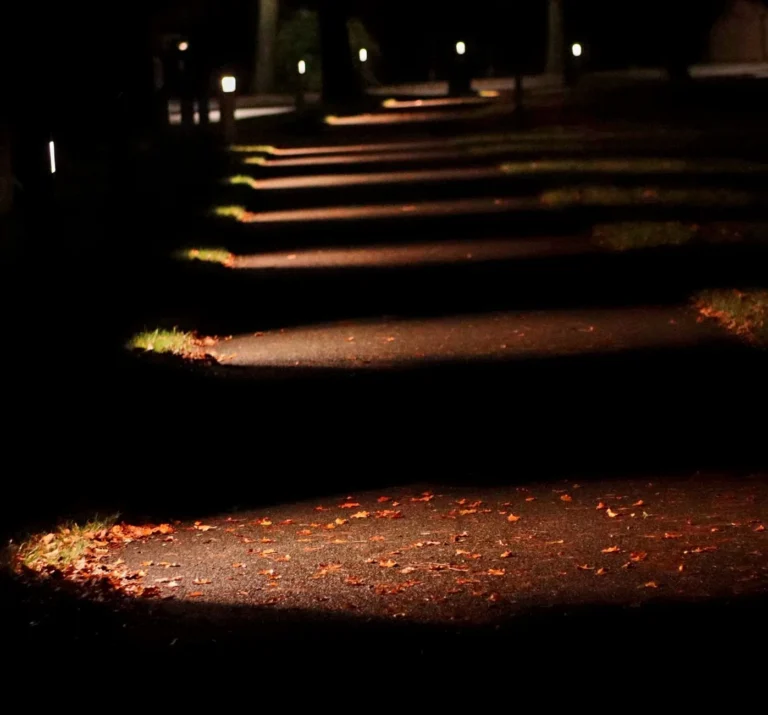
Your walkway is the first thing guests see and the most important safety feature of the yard. Path lights should be spaced six to eight feet apart on alternating sides of the walk — close enough that the pools of light overlap, far enough that you don’t create a runway effect.
- Cone path lights (12–18 in. tall): The classic choice. Look for fixtures with a full cone shade that pushes light down, not into the eyes. Brands like Volt Lighting and Kichler sell solid brass and copper versions that won’t rust and cost $25–$60 per light.
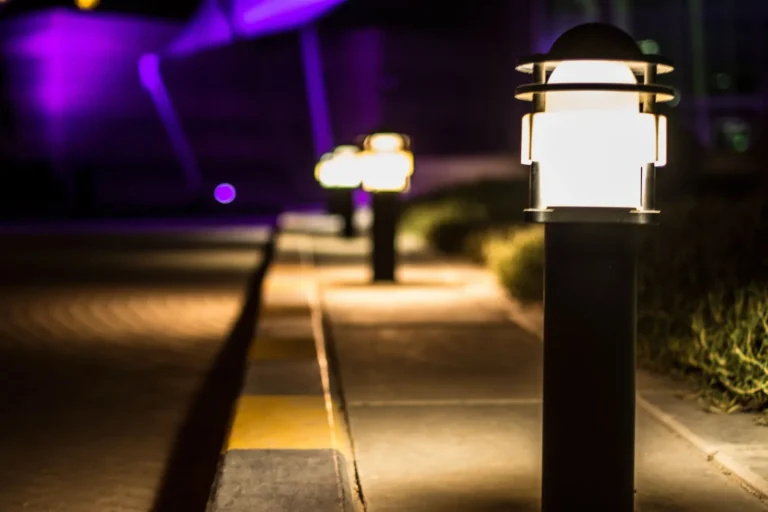
- Bollard lights: Shorter, wider posts that read as modern. Best for contemporary homes and driveways.
- Step-down lights: Small fixtures recessed into the walkway edge or a low wall. They disappear during the day and glow at night, which makes them a favorite for clean-lined houses.
- Moonlighting: For walkways that run under trees, mount a single down-light high in a branch and let it dapple the path from above. One fixture can cover a long stretch for the cost of two path lights.
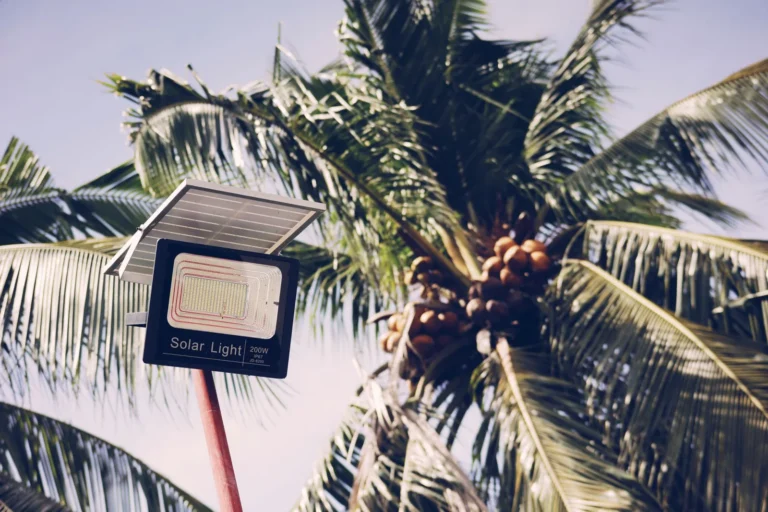
For a typical 20-foot front walk, plan on four to six fixtures. If you’d rather avoid a transformer entirely, check our guide to solar lights vs. low-voltage lighting to see when each makes sense.
Uplighting Trees and Architectural Features
Uplighting is where the biggest curb-appeal gains live. A small spotlight or well light at the base of a tree, aimed up into the canopy, turns an ordinary front yard into something a buyer photographs.
- Tree uplighting: Use a 20–35 watt-equivalent LED flood or bullet light placed one to two feet from the trunk. For a narrow tree, one fixture is plenty; for a broad oak or maple, use two at roughly 90 degrees to each other so the trunk doesn’t look flat.
- Grazing: Aim a light almost parallel to the wall to rake across stone, brick, or shiplap. This highlights texture and is the single best trick for a plain facade.
- Wall washing: Aim the light more directly at the wall from a few feet back to create an even, soft glow. Wall washing suits homes with darker siding that a graze would leave too shadowy.
- Silhouetting: Place a fixture behind a shrub or small tree aimed at the wall. The plant becomes a dark cutout against a lit background — dramatic and nearly free to add.
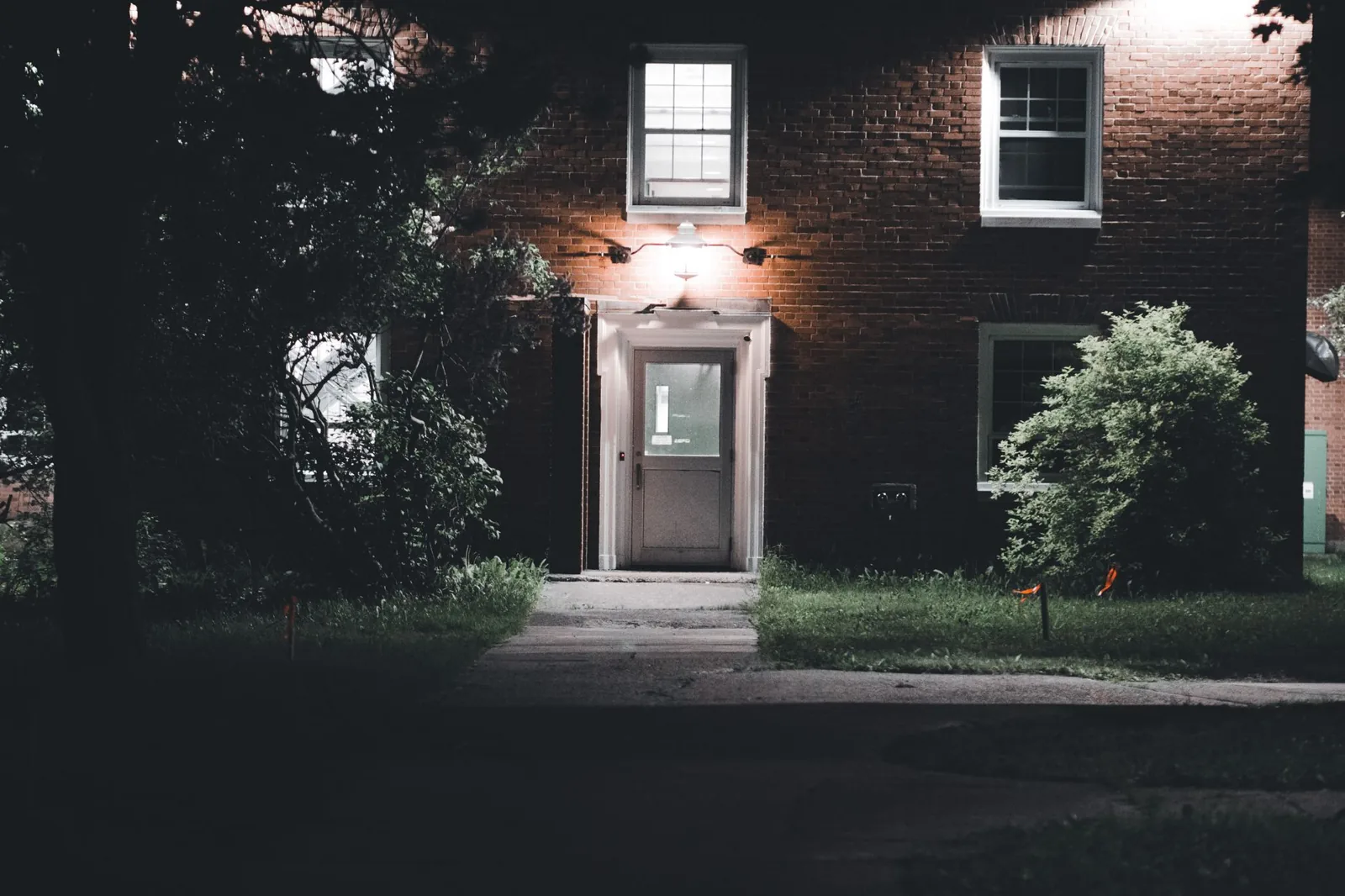
Photo by Erik Mclean via Pexels
Entry, Porch, and Facade Lighting
The front door is the focal point, so give it the most light in the yard. A single porch bulb isn’t enough.
Door sconces. Replace the builder-grade fixture with a pair of sconces mounted 60 to 66 inches above the landing. For a standard single door, one fixture per side at roughly a quarter of the door’s height looks balanced. Plan on $40 to $150 per sconce.
House numbers. Backlit or halo-lit numbers make a home look finished and, more importantly, let deliveries and emergency services find you. A $30–$80 backlit number set is one of the cheapest high-impact upgrades you can make.
Garage and driveway. One or two down-facing lights on the garage wall prevent the “black hole” effect most homes have at night. Floodlights with motion sensors here double as security.
Smart control. Adding a smart switch or a hub-based system lets you schedule everything and dim from your phone. If you’re running a larger setup, read our breakdown of how to size a landscape lighting transformer so you don’t overload the circuit.
Step and Stair Lighting for Safety
Stairs are the number one trip hazard in a front yard, and they’re the easiest place for lighting to pay for itself. The goal is to light the treads, not the whole area.
- Recessed step lights: Small fixtures set into the riser or the tread face. They cast a low wash across each step and are nearly invisible in daylight.
- Under-rail lighting: LED strip or tape light mounted under a porch or stair railing. It’s dimmable, cheap (about $5–$15 per foot), and doubles as ambient light.
- Post cap lights: If you have a railing or a low wall, cap lights on top add both a marker and a decorative touch.
A good rule of thumb: every change in elevation between the street and the front door should be lit, even a single step up to the porch.
Low-Voltage vs. Solar vs. Line-Voltage: Which to Choose
| Feature | Low-Voltage (12V) | Solar | Line-Voltage (120V) |
|---|---|---|---|
| Upfront cost | $300–$1,500 for a full system | $15–$60 per fixture | $500–$2,000+ with install |
| Brightness | Bright, consistent all night | Dim, fades in winter and shade | Brightest option |
| Installation | DIY-friendly plug-and-play | No wiring at all | Requires a licensed electrician |
| Reliability | Very reliable, year-round | Unreliable in shade and winter | Most reliable |
| Best for | Whole-yard lighting | Accent lights in sunny spots | Flood and security lights |
For most front yards, low-voltage is the sweet spot: it’s bright enough to light a walkway reliably, cheap enough to cover the whole yard, and safe enough that most homeowners install it themselves. Expect to pay about $100–$250 for a quality low-voltage transformer and $25–$60 per path or spot fixture. A full front-yard system usually lands between $800 and $2,000, depending on fixture count and whether you do the wiring yourself.
Line-voltage is the right call only for high-output security floods or when you’re already having an electrician on site. Solar earns its keep in sunny, hard-to-wire corners but rarely delivers enough light for a walkway. For a full cost breakdown, see our guide to landscape lighting costs.
Planning Your Layout Without Overbuying
You don’t need a blueprint, but a quick sketch saves real money. Walk the yard at dusk and mark where you actually need light: the walk, the stairs, the door, the house number, and one or two trees worth showing off. That’s usually eight to fourteen fixtures for a standard suburban front yard — not the thirty a big-box kit might try to sell you.
A few layout rules worth following:
- Keep path lights six to eight feet apart and stagger them.
- Aim up-lights away from the street so glare doesn’t hit drivers or neighbors.
- Choose warm white LEDs (2700K–3000K). Cool white looks clinical; warm white looks like a real home.
- Buy fixtures with the transformer’s capacity in mind — leave about 20% headroom so you can add lights later.
Frequently Asked Questions
How many lights do I need for the front of my house?
For a typical suburban front yard, plan on eight to fourteen fixtures: four to six path lights, two to three uplights on trees or the facade, a pair of door sconces, and one or two step lights. Smaller townhome fronts may only need five or six.
Do landscape lights increase home value?
They help more than most exterior upgrades. Lighting consistently ranks near the top of buyer “must-have” lists, and it’s one of the few improvements that pays off both in resale appeal and in everyday security while you still live there.
Should I use solar or low-voltage lights in the front yard?
Low-voltage wins for the front yard in almost every case — it’s brighter and reliable year-round. Solar only makes sense for accent lights in spots that get full sun all day and are hard to wire. Shaded or north-facing yards should skip solar entirely.
What color temperature is best for landscape lighting?
Warm white, in the 2700K to 3000K range. It flatters brick, stone, and greenery and makes the house feel welcoming. Cool white above 4000K tends to look harsh and institutional on a home exterior.
Can I install front-yard landscape lighting myself?
Low-voltage systems are designed for DIY and don’t require a permit or an electrician in most areas. Line-voltage fixtures and any new outdoor electrical wiring do require a licensed electrician.
The Bottom Line
The strongest landscape lighting ideas for front of house share one thing: they light a purpose, not just the grass. Light the walk so guests walk safely, light the door so the house feels lived in, and light a tree or two so the yard has depth after dark. A layered low-voltage system with eight to fourteen warm-white fixtures will do all of that for roughly $800 to $2,000 — and it’s a project most homeowners can finish in a weekend.
Start small if the budget is tight: a pair of door sconces, four path lights, and a single uplight on the best tree cover most of the visual payoff. Add the rest later, because a front yard that glows warm at night is one of the cheapest ways to make a house look — and feel — like home.