Landscape Lighting Ideas for Backyard
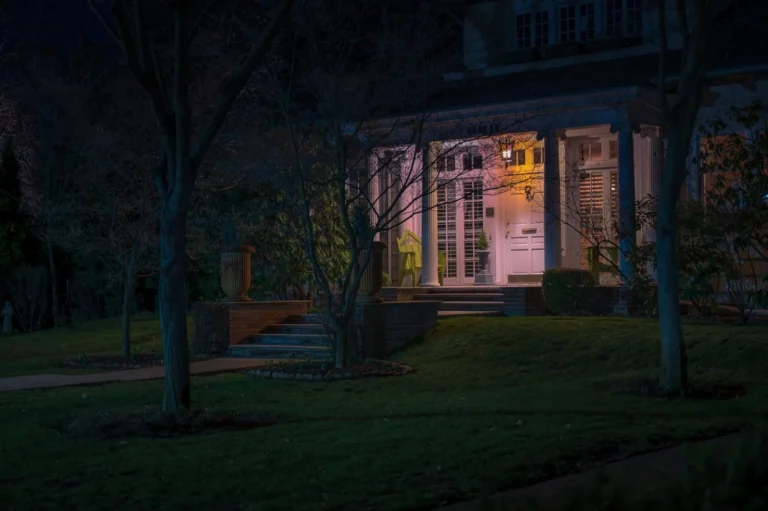
Good landscape lighting ideas for backyard spaces do more than make your yard look expensive after dark. The right lights help people walk stairs without tripping, keep a grill area usable past sunset, and give your home a warm glow that reads clearly from the street. It is one of the most affordable exterior upgrades you can make, and you can start small.
The trick is that lighting a backyard is not about throwing floodlights at the fence. It is about layering a few focused fixtures so the space feels intentional rather than lit up like a parking lot. Most homeowners can get there with six to twelve low-voltage fixtures and an afternoon of work, for far less than most landscape contractors charge.
This guide walks through the layouts and fixtures that actually earn their keep, with real prices and the mistakes to watch for. Whether you want a safe walkway, a dramatic tree, or a patio you can keep using after dark, these ideas give you a place to start.
Why Backyard Lighting Pays for Itself
Outdoor lighting is one of the few home improvements that works as hard for you at 10 p.m. as it does the day you install it. Three things happen the moment you light a backyard properly.
First, safety. Dark stairs, an uneven paver path, or a pool edge are trip hazards the second the sun drops, and a single low-voltage path light on each set of steps removes most of that risk. Second, security. A lit yard signals that a house is occupied and watched, which is why most home security guides rank exterior lighting ahead of cameras as the first deterrent. Third, money. A small 12-volt LED system costs pennies a night to run.
It also preserves how you use the space. A patio you abandon at dusk is dead square footage for half the year. Light it, and a $300 fixture set multiplies the usable square footage of a $20,000 patio.
Start With a Plan, Not a Shopping Spree
The most common backyard lighting mistake is buying a big box of matching path lights first and finding places for them second. That produces a runway of evenly spaced lights down one edge of the lawn, which is exactly the wrong look.
Instead, walk the yard at night with a flashlight and mark the three things you actually need: the route people walk, the feature you want to show off, and the work areas (grill, table, fire pit). Those three needs map to three distinct light types.
Layer Three Kinds of Light
- Path and step lights light the routes. Low fixtures, 12 to 18 inches tall, spaced 6 to 8 feet apart along a walkway or stair edge.
- Uplights and spotlights light the features. A well light or bullet light aimed up a tree trunk, against a stone wall, or at a water feature.
- Task and ambient lights light the work areas. String lights over a seating area, or a wall wash over the grill station.
When all three layers exist, the yard reads as designed. Skip one, and it reads as spotty no matter how many fixtures you buy.
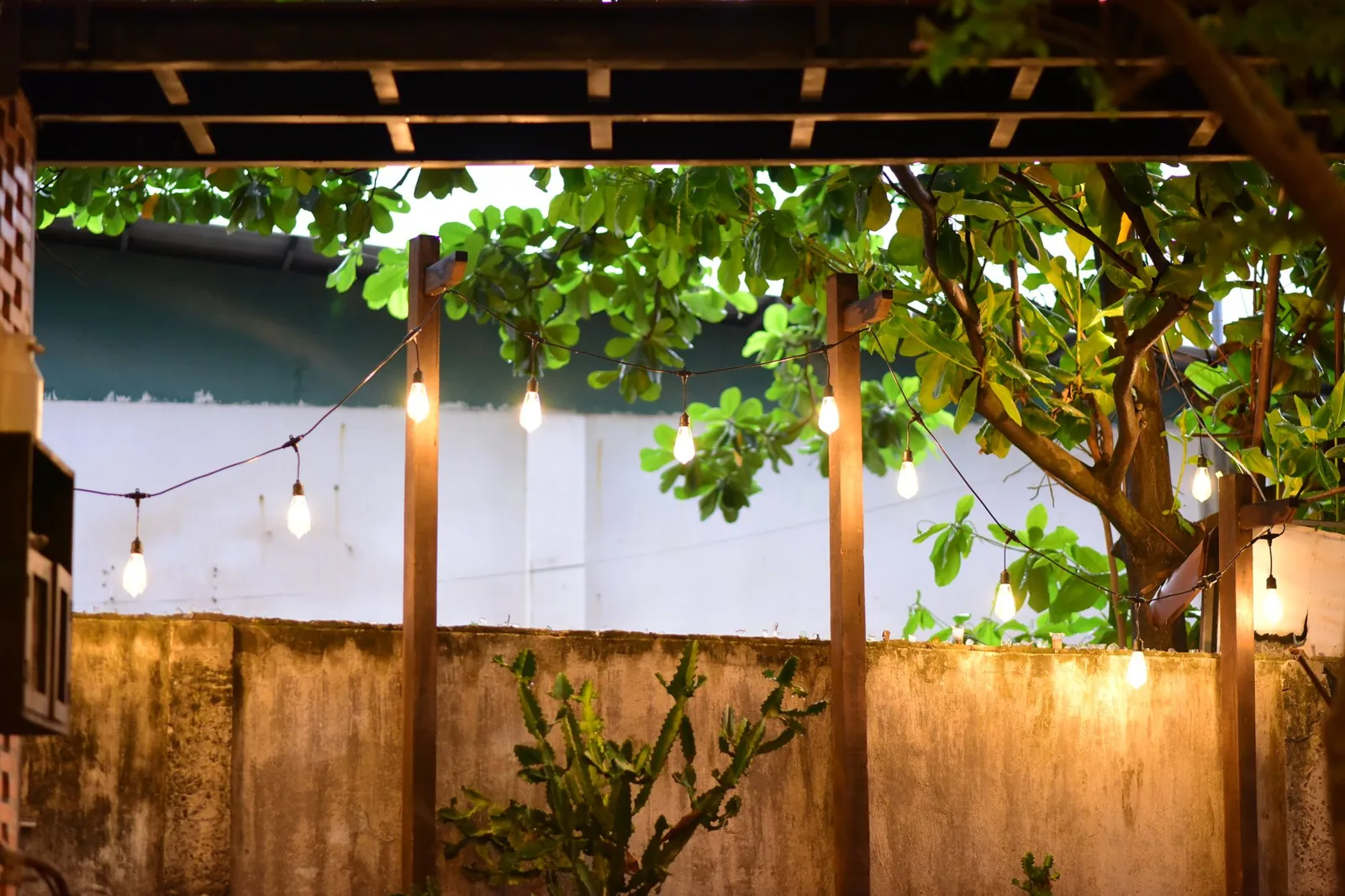
Photo by Pexels via Pexels
Uplighting Trees and Architectural Accents
If you only add one dramatic element, uplight a tree. A small bullet light or in-ground well light aimed up the trunk makes a mature oak or maple the centerpiece of the yard at night, and it costs under $100 for the fixture.
Aim for a 12-volt LED well light rated around 3 to 5 watts. Position it 1 to 3 feet from the trunk and angle the beam so it washes up into the canopy. On a tall, wide tree, two fixtures on opposite sides give depth. One fixture dead-center just makes a hot white column up the bark.
The same technique works on other vertical surfaces. Grazing light down a textured stone or brick wall picks up every shadow and makes cheap siding look intentional. A narrow-beam spotlight hitting a fountain or a Japanese maple from below turns a 4-foot plant into a focal point. Skip colored lenses; warm white at 2700K to 3000K looks natural, while the blue and green gels marketed for “party effects” read as dated within a season.
Path, Step, and Safety Lighting
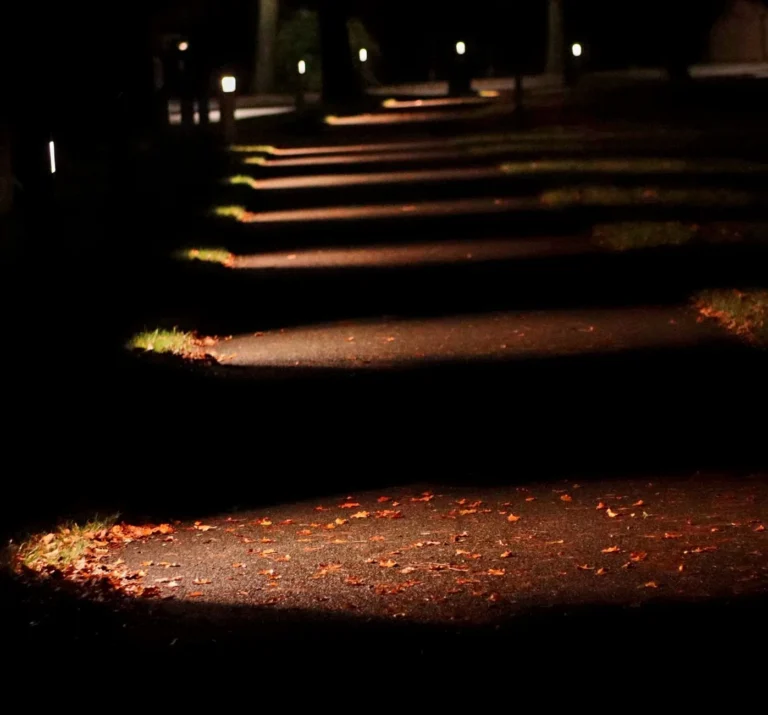
Path lights are the workhorses of the yard, and the detail that separates a pro job from an amateur one is spacing. Place fixtures 6 to 8 feet apart down the center line of a path, and stagger them on alternating sides when the path is narrow. Keep the light head low so the beam pools on the ground instead of glaring into your eyes as you walk.
Steps get their own treatment. A low fixture tucked beside the riser, or a small hardscape light recessed into the step face, lights the exact place people are most likely to fall. If you have a deck, a strip of tape light under the handrail or along the stair nosing costs around $40 and hides completely by day.
For walkways that wander, look at our path lighting ideas for layouts that follow curves instead of running a rigid straight line.
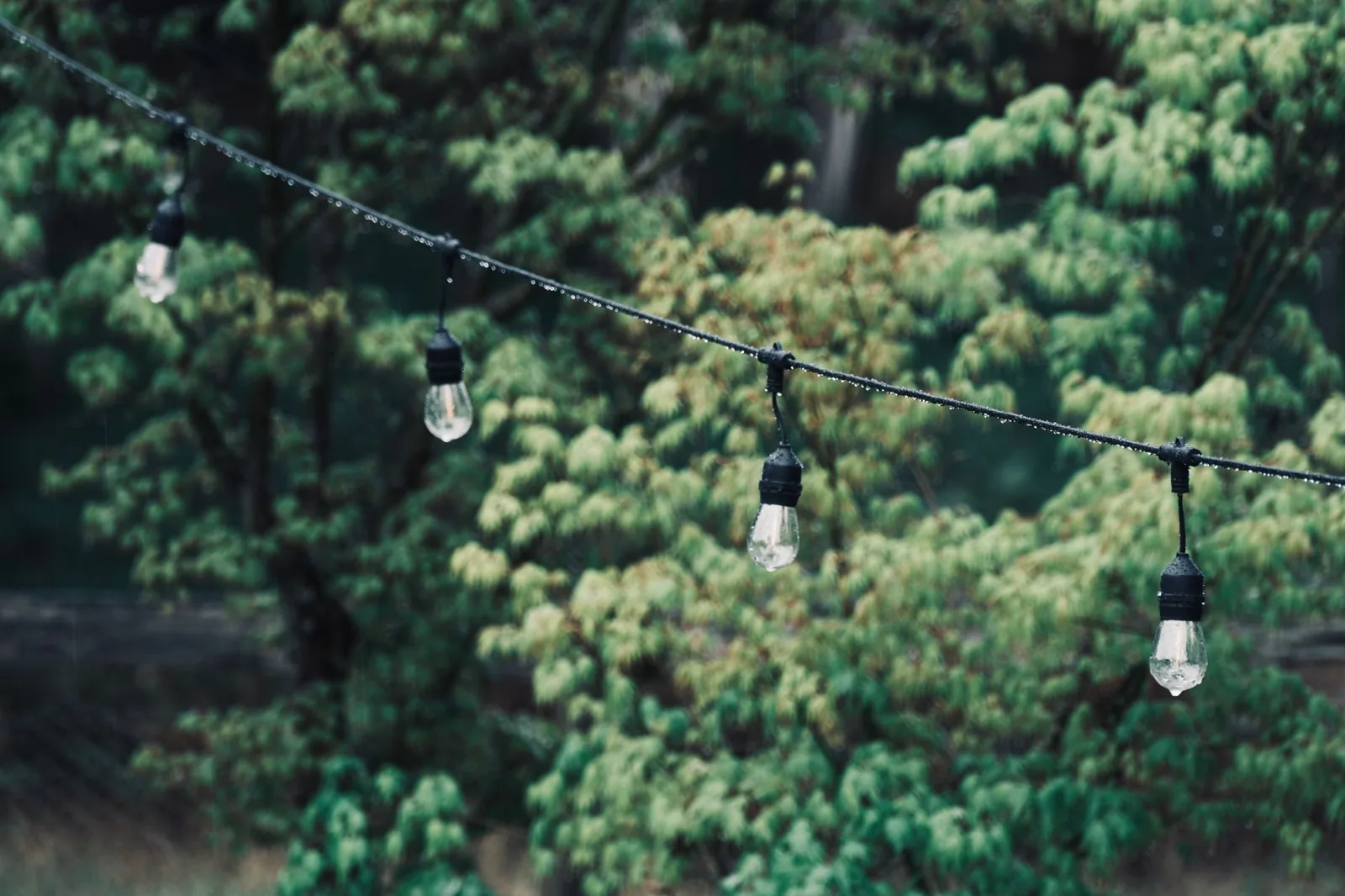
Photo by Yanming Guo via Pexels
Landscape Lighting Ideas for Backyard Entertaining
This is where lighting stops being a safety feature and becomes the reason people linger. The single highest-impact addition is an overhead glow over the seating area, and the cheapest way to get it is a string of cafe lights.
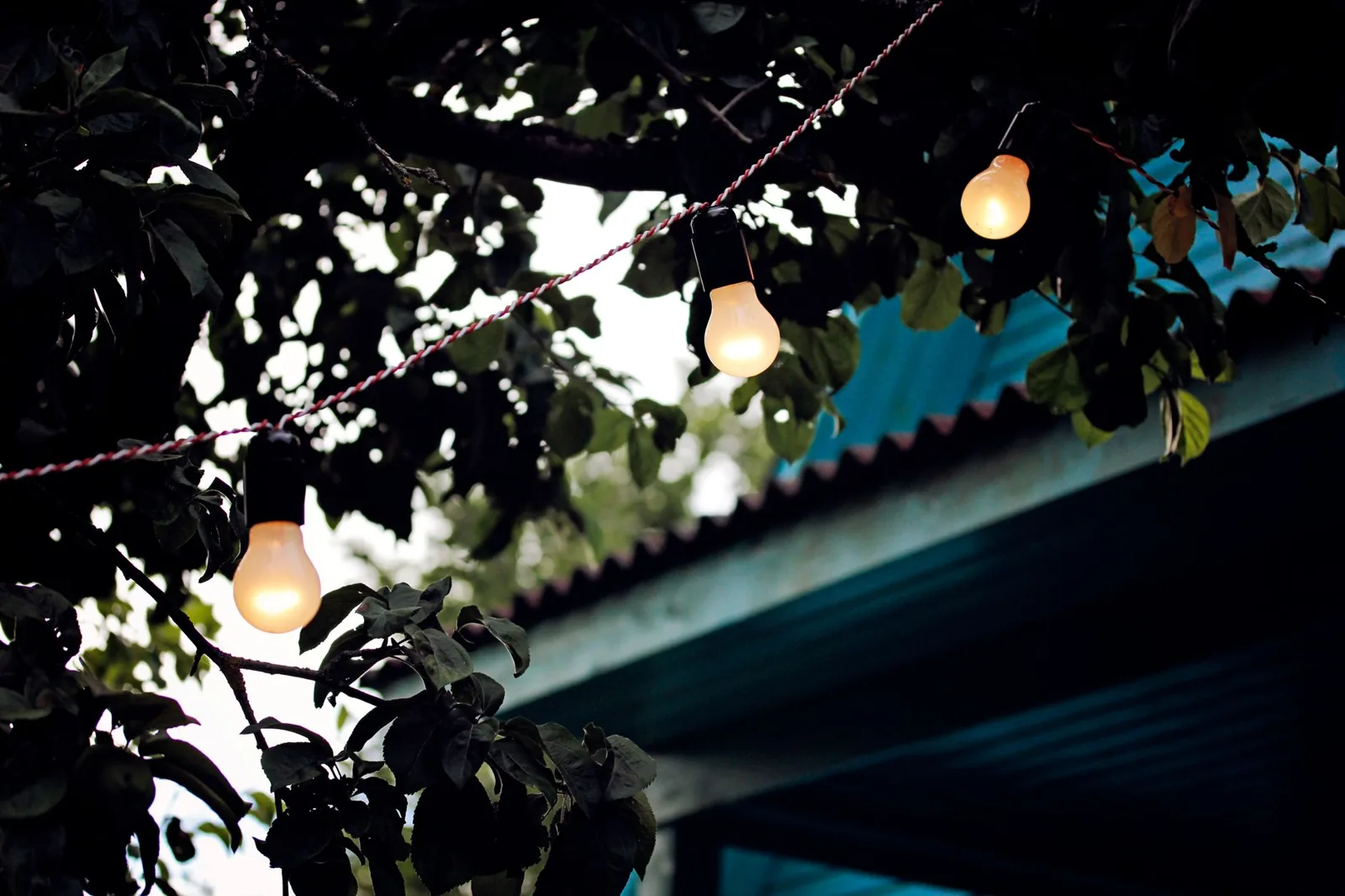
Run two or three strands of 48-foot cafe lights in a zigzag over the patio, anchored to the house, a pergola, or two posts set in concrete. A dimmable 12-volt or line-voltage string rated for outdoor use runs $30 to $120, and it instantly turns a table and chairs into a destination.
Beyond string lights, a few targeted moves complete the mood. Put a small uplight behind a grill or bar station so the person cooking can see the grate. Wash a low wall or planter to define the edge of the “room.” Add a dimmer wherever possible, because the difference between “inviting” and “interrogation” is usually one dial setting. If most of your fixtures run off the same transformer, circuit-level dimming is the cleanest fix—we cover sizing in our guide on low-voltage lighting cost.
Cost and Layout Comparison
The chart below breaks down the four fixture types you will mix and match, so you can price a plan before you buy a single light.
| Fixture Type | Typical Unit Cost | Best For | Notes |
|---|---|---|---|
| Path & step lights | $20–$80 each | Walkways, stairs, edging | Buy fixtures with warm-LED bulbs included |
| Uplights & spotlights | $40–$150 each | Trees, walls, water features | Look for adjustable beam angle |
| String / cafe lights | $30–$120 per strand | Patios, pergolas, seating | Check the outdoor/damp rating |
| Hardscape & tape lights | $30–$100 per kit | Steps, rails, retaining walls | Hide the strip to keep a clean look |
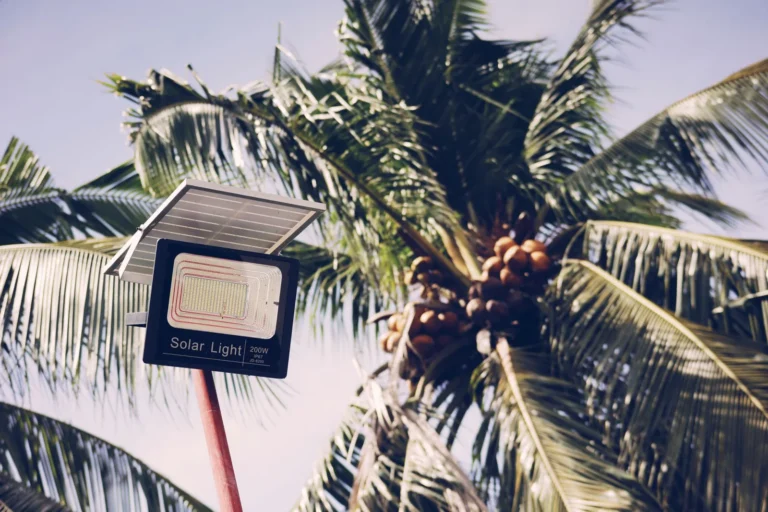
A full backyard using these layers typically lands between $600 and $2,000 in DIY materials for 10 to 20 fixtures plus a transformer. Hiring a landscape lighting company usually runs $2,500 to $6,000 for a comparable job, so the fixture cost is often the smaller half of the equation. Every fixture shines its own light, but they all feed into one landscape lighting transformer. If you are picturing solar instead, note that solar path lights run dimmer than wired LEDs and fade by midnight in winter—there is a direct tradeoff to weigh.
Frequently Asked Questions
How many landscape lights do I need for a backyard?
Most backyards need 10 to 20 fixtures total. A good rule of thumb is three to five path lights per 30 feet of walkway, one uplight per tree or architectural feature, and two to four strands of cafe lights over a typical patio.
How much does it cost to light a backyard?
A DIY low-voltage system runs $600 to $2,000 in materials, while a professional design-and-install job typically costs $2,500 to $6,000. Per-fixture install rates run $50 to $150 depending on access and wiring difficulty.
What is the best voltage for backyard lighting?
12-volt low-voltage lighting is the standard for residential yards. It is safer to install, cheaper to run, and less code-restricted than 120-volt line voltage, while still powering bright, efficient LEDs.
Do LED landscape lights save money?
Yes. A 4-watt LED fixture costs well under a dollar per month to run nightly, versus several dollars for an equivalent 35-watt halogen. LEDs also last 25,000 to 50,000 hours, so you rarely replace bulbs.
Can I install backyard lighting myself?
Low-voltage systems are DIY-friendly because the wiring carries a safe 12 volts and can run above ground or be tucked shallowly along beds. Line-voltage fixtures and hardwired circuits are best left to a licensed electrician.
For design inspiration, Better Homes & Gardens rounds up landscape lighting ideas.
The Bottom Line
Landscape lighting ideas for backyard spaces come down to one choice: light the routes, light the features, and light the places people gather. Do all three and the yard works harder for you than almost any other exterior upgrade at this price.
Start small and layer as you go. Uplight one tree this weekend, line the walkway next month, and hang cafe lights when the weather turns. Because the fixtures share a transformer, each addition just plugs into the system you already have. The result is a backyard you keep using long after dark—and a house that looks cared for, from the curb to the back fence.