Porch Light Ideas: 12 Ways to Brighten Your Entryway (Style, Cost & Wiring)
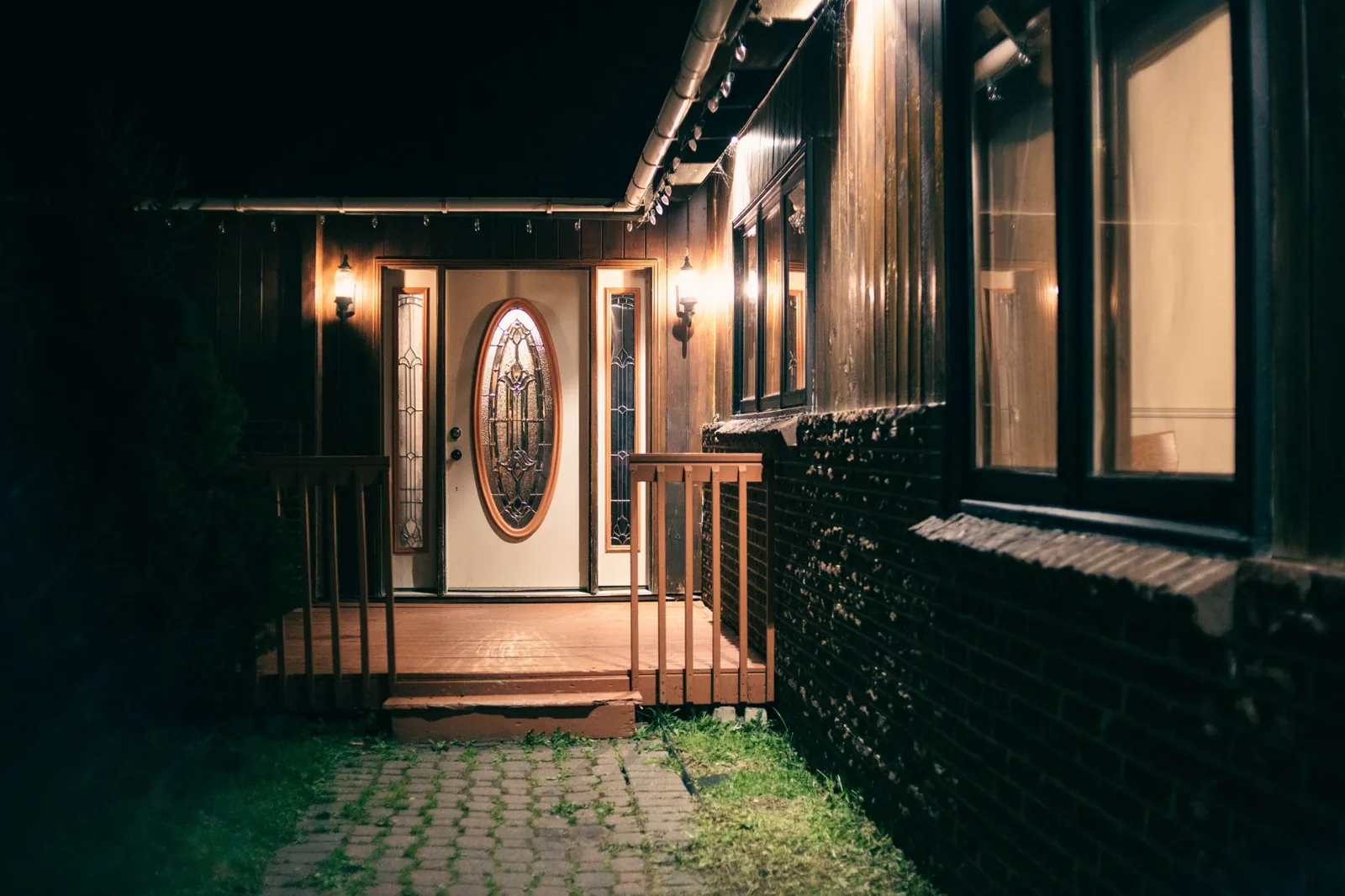
Your front porch is the first thing visitors see at night, and the light beside the door sets the tone for the whole house. The right porch light ideas do more than help you find your keys after dark — they frame the entryway, add curb appeal, and discourage would-be intruders. Whether you’re swapping a tired flush mount or planning a complete outdoor lighting overhaul, you have far more options today than the brass lantern your parents grew up with.
Below are 12 porch light ideas organized by fixture type, finish, and budget, along with sizing rules, real cost ranges, and wiring notes so you know exactly what you’re buying before you open the box.
What a Porch Light Is Actually Supposed to Do
Before picking a style, decide what you need the fixture to accomplish. Most porch light ideas fall into one of three jobs:
- Task lighting: enough output to unlock the door, read a package label, or greet someone on the step.
- Ambient lighting: soft, welcoming glow that makes the entry feel finished rather than harsh.
- Security lighting: bright, often motion-triggered light that illuminates anyone approaching the door.
A single fixture can handle two of these jobs, but rarely all three. If security is the priority, you’ll likely pair a decorative wall lantern with a separate motion floodlight. If curb appeal is the priority, you’ll choose the fixture for how it looks lit from the street and let a low-wattage bulb keep the glare down.
Porch Light Ideas by Fixture Type
The fastest way to narrow your search is by fixture shape. Each type mounts differently and suits a different porch.
| Fixture Type | Best For | Typical Cost (Fixture Only) |
|---|---|---|
| Wall lantern / sconce | Traditional and transitional homes; most common choice | $40–$180 |
| Flush mount | Low-clearance ceilings and small covered porches | $25–$120 |
| Semi-flush mount | Porches with 8–9 ft ceilings | $50–$200 |
| Pendant | Covered porches with ceilings of 9 ft or more | $60–$250 |
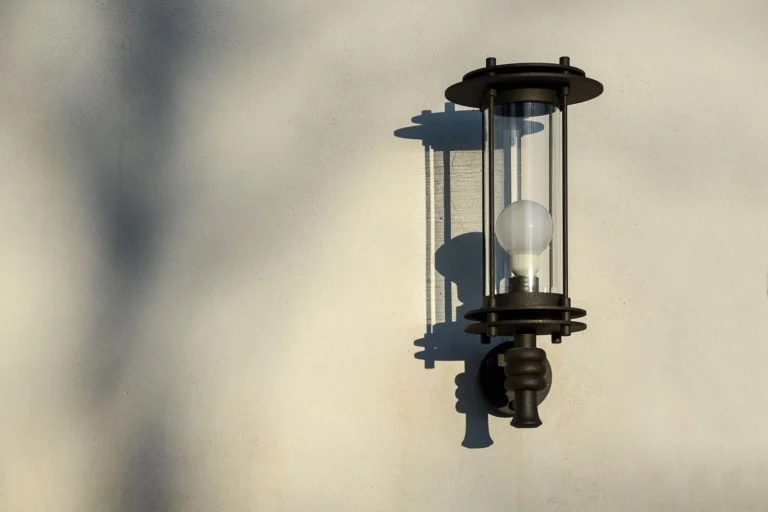
Wall lanterns (also called sconces) mount directly to the wall beside or above the door and are the default for most American porches. Brands like Hinkley, Kichler, and Progress Lighting dominate this category, and you can find models from farmhouse black to coastal bronze. Expect to pay $40–$180 for a decent die-cast aluminum fixture, more for solid brass.
Flush and semi-flush mounts attach to the porch ceiling instead of the wall, which makes them the better choice when there’s no wall space next to the door or when the ceiling is low. They throw light downward in a wide pool, which is ideal for illuminating a doormat or a small seating area.
Pendants work on deep, covered porches where the ceiling is high enough to hang something. A single large pendant centered over the door makes a strong architectural statement, while a row of smaller pendants suits a wraparound porch.
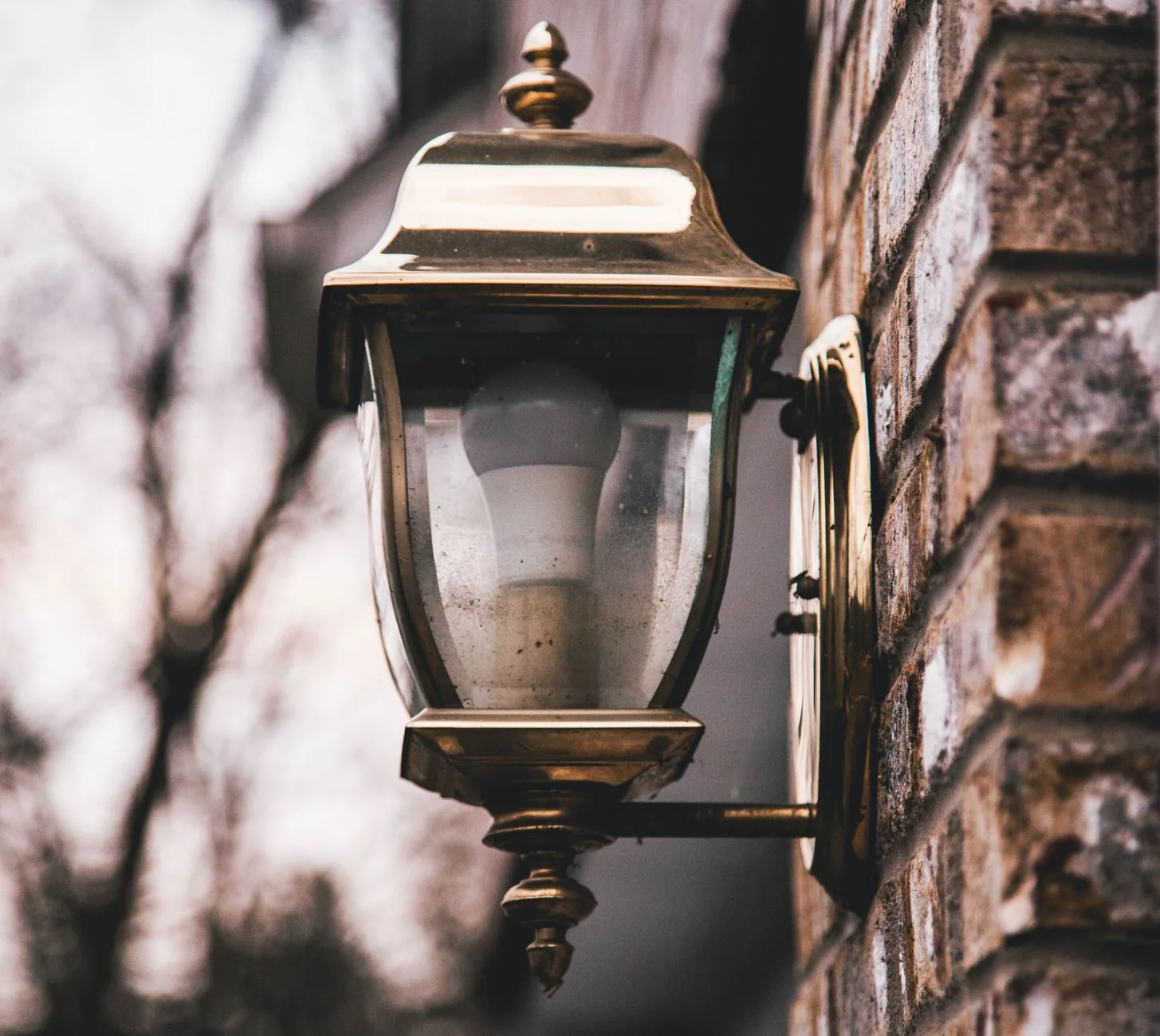
Photo by Craig Adderley via Pexels
How to Choose the Right Size
Porch light sizing goes wrong more often than any other part of the project. The most common mistake is a fixture that’s too small, which looks timid against a full-height door and leaves dark corners.
A practical rule of thumb: the fixture height should be roughly one-third to one-quarter of the door height. For a standard 80-inch door, that means a fixture roughly 20–27 inches tall. If you’re hanging fixtures on either side of a double door, each one can be a little smaller since they work as a pair.
For the mounting height, the center of a wall lantern should sit about 66–72 inches above the finished porch floor, or slightly above eye level. That’s high enough to light faces without shining directly into them.
If you’re mounting a light on a brick or stone wall, buy a fixture with an extended backplate or plan on a mounting block so the base sits flush. And always verify the box includes the mounting hardware and a ground wire before you start — cheaper fixtures sometimes skimp on both.
Finish and Style Ideas
Once you know the shape and size, the finish is where personal style takes over. Here are a few porch light ideas that hold up well over time:
- Matte black with clear glass is the safest modern choice and reads equally well on a farmhouse, craftsman, or new-build exterior.
- Oil-rubbed bronze with seeded glass softens the glare and suits traditional and Tudor-style homes.
- Brushed nickel or stainless matches contemporary hardware and stands up to coastal salt air better than raw steel.
- Antique brass or copper develops a natural patina and looks at home on brick and stone facades.
One detail worth checking before you buy: wet versus damp rating. Any fixture on an open porch or fully exposed wall needs a “wet location” rating, while a fixture under a deep roof overhang can get away with “damp location.” Look for the UL rating on the box; it’s the difference between a light that lasts five years and one that rusts out after two.
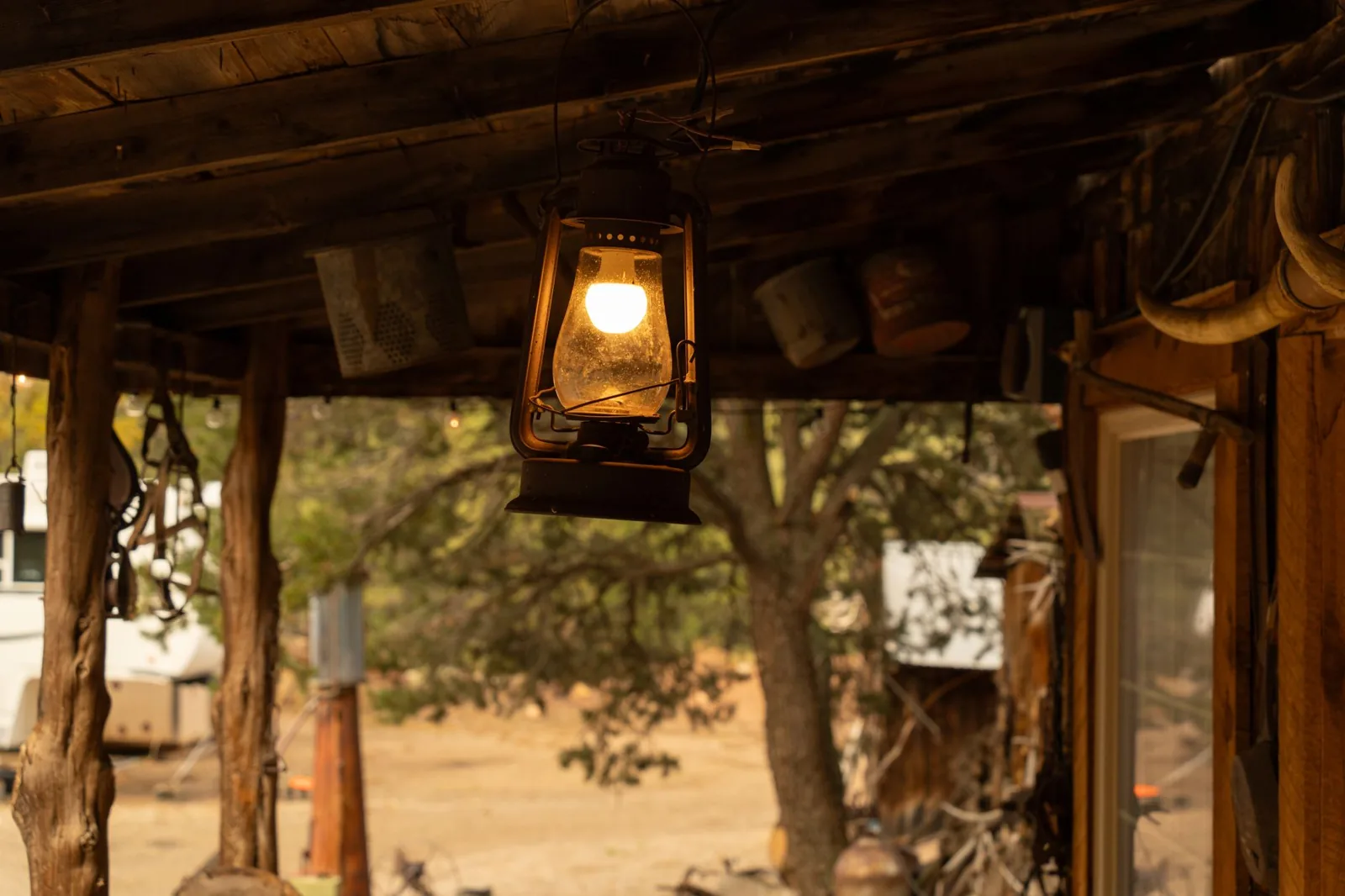
Photo by Alex Moliski via Pexels
Smart and Motion-Sensor Porch Light Ideas
Porch lighting has quietly become one of the easiest places to add smart-home features, and you don’t need to replace the whole fixture to do it.
The lowest-effort upgrade is a smart bulb. A Philips Hue or Wyze bulb in your existing lantern gives you scheduling, dimming, and color temperature control from your phone, usually for $15–$40 per bulb. Many also have a built-in “dusk to dawn” routine so you never touch a switch.
The next step up is a motion sensor, either built into the fixture or added to the circuit. Motion-activated porch lights are one of the cheapest security upgrades you can make: the light flips on the moment someone steps onto the porch, which is enough to make most would-be intruders move on. Look for a sensor with an adjustable range and a “test” mode so you can aim it without triggering it every five seconds.
If you want both, brands like Ring, Arlo, and Eufy sell porch lights with integrated cameras and two-way audio. They cost more — $150–$250 — but they combine the entry light, motion detection, and a doorbell camera in a single fixture, which saves you from cluttering the wall with three separate devices.
What Porch Lighting Costs
What you’ll spend depends mostly on whether the wiring already exists.
- Replacing an existing fixture: $40–$250 for the light plus about $75–$150 for an electrician to swap it, if you’d rather not touch the wiring yourself. Many homeowners do this job themselves in under an hour with basic tools, since the junction box is already there.
- New fixture where no wiring exists: add $300–$700 for the electrician to run a new circuit and install a switch, plus any drywall or siding repair.
- Dimmer or smart switch: $20–$60 for the switch, plus labor if you hire it out.
Bulbs are a small ongoing cost that’s easy to overlook. A basic LED porch bulb costs $3–$8 and uses roughly 8–12 watts, which works out to a few dollars a year in electricity even if it runs all night. That’s one reason to skip old incandescent bulbs entirely — an LED can run dusk to dawn for years and still cost less than a single incandescent replacement.
If your porch project is part of a larger outdoor lighting plan, it’s worth pricing the whole job together. We cover what to budget for a full landscape lighting install and how low-voltage wiring affects the total, and our outdoor string lights guide shows how to warm up the rest of the yard for under $100.
Frequently Asked Questions
How bright should a porch light be?
Aim for 400–800 lumens at the door. That’s bright enough to see keys and faces without blinding anyone on the step. In LED terms, that’s roughly a 5–9 watt bulb. For a fixture beside a large or double door, go toward the higher end of the range.
Can I leave my porch light on all night?
Yes, and many homeowners do — it’s a simple deterrent. With an LED bulb drawing around 8–12 watts, leaving it on dusk to dawn costs only a few dollars per year. A dusk-to-dawn sensor or smart routine automates it so you never forget.
Do porch lights need to match my interior fixtures?
No. Exterior finishes should coordinate with your front door hardware, house trim, and the other outdoor fixtures (garage lights, sconces), not the living room. Black, bronze, and nickel are the finishes that match the widest range of hardware.
What’s the difference between wet-rated and damp-rated fixtures?
A wet-rated fixture is sealed for direct exposure to rain and snow; a damp-rated fixture is only safe under a covered porch or deep overhang. For any light that can get rained on, choose wet-rated — it’s a small price difference for a much longer lifespan.
Can I install a porch light myself?
If the wiring and junction box already exist, yes — it’s one of the more approachable DIY electrical jobs. Turn off the breaker, confirm the wires are dead with a tester, and match black-to-black, white-to-white, and ground-to-ground. If no wiring exists, hire a licensed electrician; running a new circuit is not a DIY project.
The Bottom Line
The best porch light ideas start with function and let style follow. Nail down the fixture type and size first — a wall lantern a third of your door’s height, mounted 66–72 inches off the floor — then choose a finish that matches your front door hardware, and add motion or smart control if security matters to you.
A quality porch light runs $40–$250 as a fixture-only purchase, and most homeowners can swap one in under an hour. For deeper guidance, This Old House has solid step-by-step installation walkthroughs, and Bob Vila covers exterior fixture styles in more depth. Replace a tired fixture this weekend, and your entryway — and your curb appeal — will look like a different house by Sunday night.