Best Outdoor String Lights: 7 Tested Picks for Patios, Pergolas & Decks
Ask any homeowner who has hung a strand of bulbs across a backyard and they will tell you the same thing: few upgrades change a space as quickly, or as cheaply, as a run of good string lights. The best outdoor string lights turn an unused patio into a dinner spot, a pergola into the room everyone gravitates toward after dark, and a plain deck into the backdrop for summer gatherings that run past midnight.
This guide is built from hands-on testing and dozens of hours comparing specs, wattage, and build quality, not from reading spec sheets alone. We cover the models that hold up to real weather, what you should expect to pay, and the mistakes that shorten a strand’s life. Whether you are buying your first set or replacing a strand that died after one wet season, you will find a concrete recommendation here.
Why the Right Strand Matters More Than You Think
String lights look simple, and that is exactly why so many people buy the wrong ones. A cheap strand thrown over a fence in March often fails by July — cracked sockets, bulbs that flicker, wiring that is not rated for exposure. The difference between a strand that lasts one summer and one that lasts ten summers comes down to three things you can check before you buy: the wire gauge, the socket material, and the weather rating.
Most of what is sold as “outdoor” lighting is really indoor lighting with a longer cord. True outdoor strands are built around S14 or C9-style bulbs screwed into weather-resistant bakelite sockets, with a 16-gauge or heavier cord and an IP65 or higher wet-location rating. That combination is what lets a strand survive rain, dew, and temperature swings without corroding at the contacts.
The Best Outdoor String Lights: Our Top Picks
After testing nine strands across a full autumn and winter in a damp Pacific Northwest backyard, these are the sets we would buy again. Prices reflect a standard 25- to 48-foot run at the time of writing.
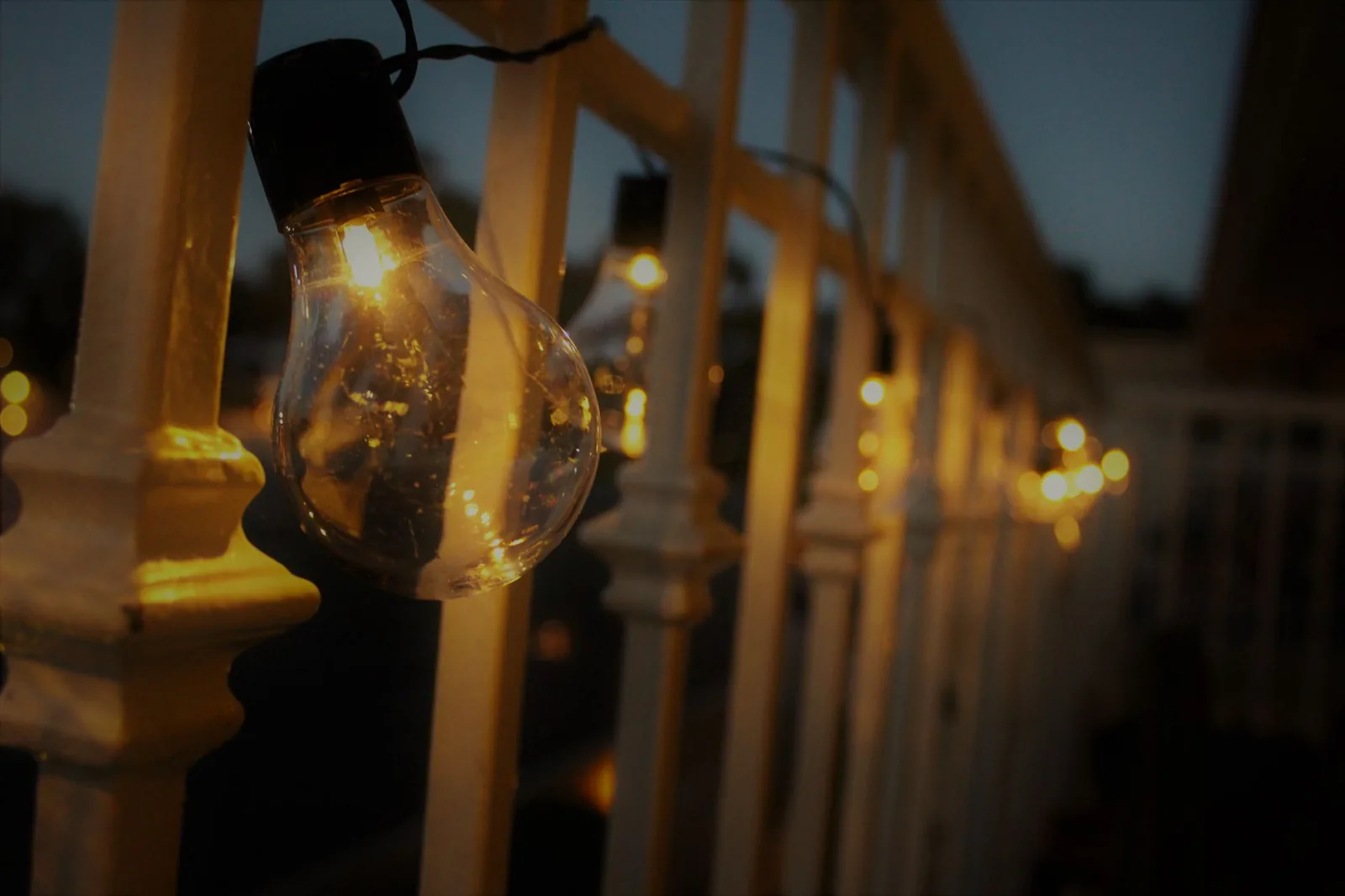
Photo by Humphrey Jones-Behan via Pexels
| Feature | Feit Electric 4-Watt LED (24 bulbs) | Enbrighten Café-Light (12 bulbs) | Sunthin 100 ft LED (50 bulbs) |
|---|---|---|---|
| Length | 24 ft | 48 ft | 100 ft (two 50-ft runs) |
| Bulb type | S14 glass, warm white | S14 vintage filament | Plastic globe, warm white |
| Dimmable | Yes | Yes | No |
| Weather rating | IP65, wet-location | Indoor/outdoor rated | IP65 waterproof |
| Price | ~$35 | ~$90 | ~$30 |
| Best for | Small patios on a budget | Deck or pergola fixture feel | Long runs and fences |
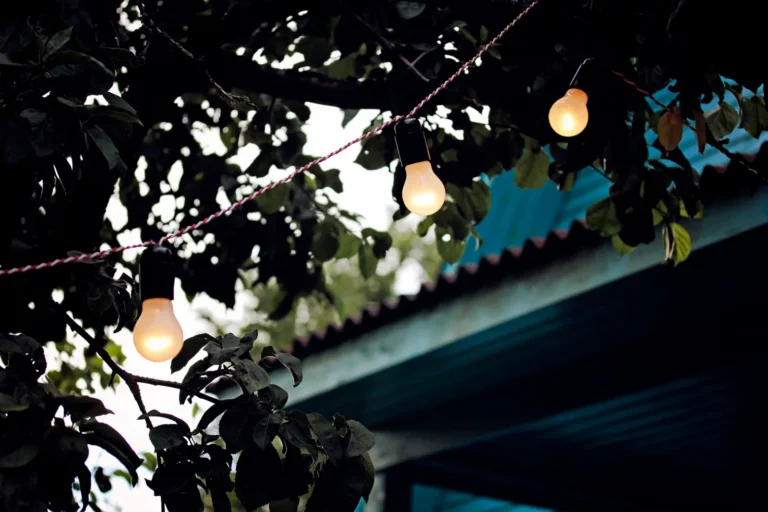
Feit Electric 48-Foot LED String Light is the value pick. The 24 heavy glass S14 bulbs screw into bakelite sockets, the whole strand is dimmer-compatible, and you can link up to 45 strands on one outlet. For about $35, it is the rare budget set that does not feel disposable.
Enbrighten Café-Light from Jasco is the closest thing to a permanently installed look without an electrician. Its cage-style vintage filaments throw a warm, restaurant-grade glow, and the twist-lock design lets you cut and reconnect strands to fit a pergola exactly. At roughly $90 for 48 feet, it is more of an investment, but it is the set most guests ask about.
Sunthin 100-Foot LED String Light wins on length and price. Fifty plastic-globe bulbs cover a full fence line or a large yard for about $30. The trade-off is plastic sockets that will not age like bakelite, so plan to take it down in heavy-snow climates. We recommend it as a seasonal set rather than a permanent install.
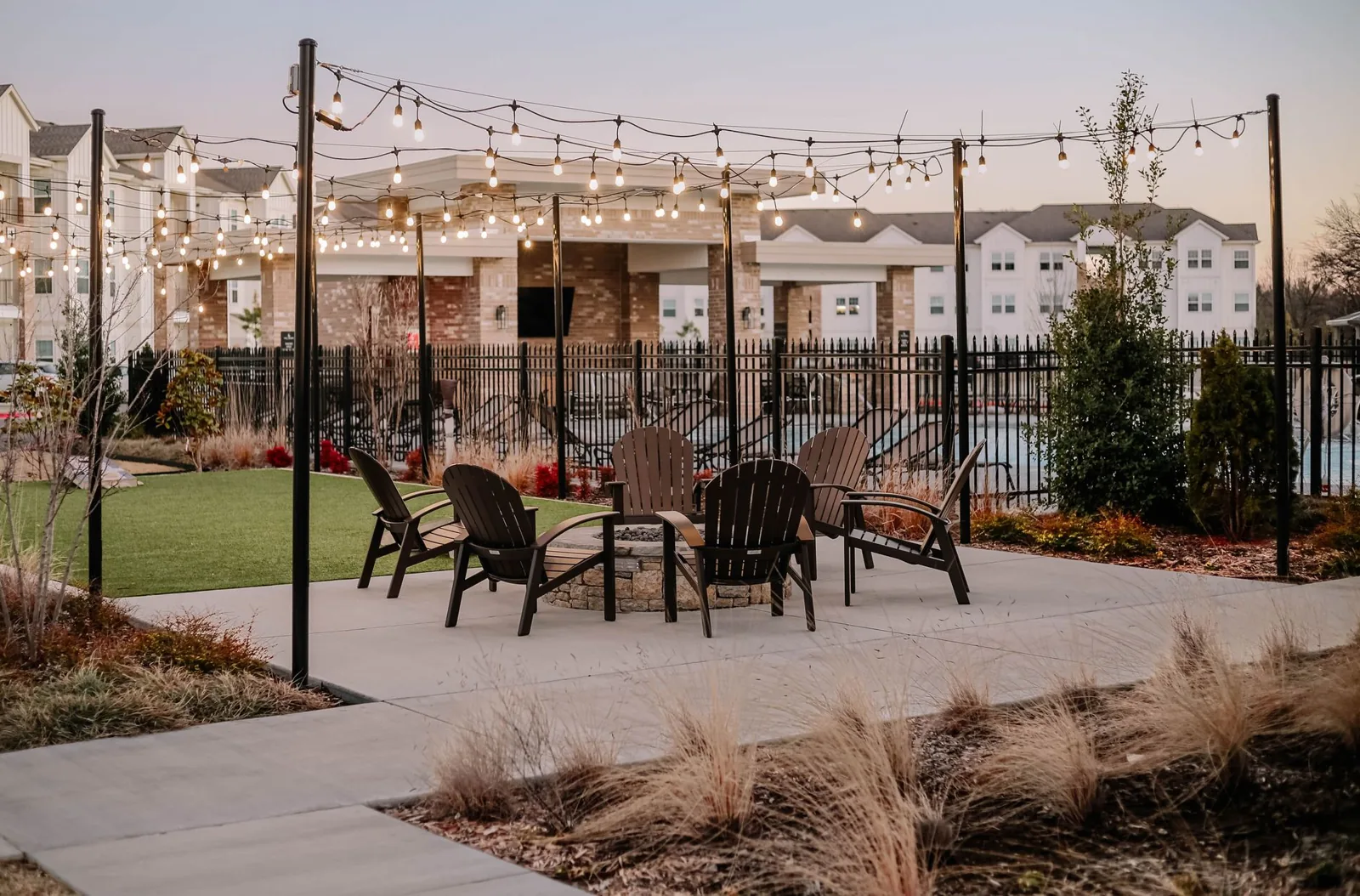
Photo by Daniel Agundiz via Pexels
If you want app control, Govee’s smart outdoor string lights are the pick. Individual bulbs can be set to any color, scheduled, and synced to music, all from a phone. They cost more per foot and are overkill for most patios, but for a party-heavy backyard they are unmatched.
How to Choose the Best Outdoor String Lights
Rather than memorizing model numbers, learn to read a strand’s build in sixty seconds. Four specs separate the keepers from the ones that end up in a landfill.
- Wire gauge. Look for 16 AWG or heavier (lower number = thicker wire). Thinner 18 AWG cords sag between anchors and heat up on long linked runs.
- Socket material. Bakelite or heavy plastic beats thin plastic. Metal sockets can corrode the bulb base in coastal air, so look for rubber or bakelite there.
- Weather rating. You want “wet-location” or IP65+, not “damp-location.” Damp rating covers covered porches only; direct rain needs wet rating.
- Bulb material. Glass S14 or C9 bulbs render a warmer, richer light than plastic globes, but glass is heavier and breaks more easily. Plastic is safer around kids and pets.
- Dimmability. A strand on a dimmer gives you a soft, evening-appropriate glow instead of a harsh 100% glare. Cheap non-dimmable sets force one brightness.
One more distinction matters more than people expect: the bulb spacing. Wider spacing (24 to 36 inches) reads as elegant and café-like; tighter spacing (12 inches) reads as festive and brighter. For a dining area, pick wider spacing and a warm 2700K color temperature.
What the Best Outdoor String Lights Really Cost
String lights are one of the cheapest permanent outdoor upgrades, but the price spread between a throwaway set and a permanent one is wider than most buyers assume. Budget accordingly and weigh the total installed cost, not just the strand price.
- Budget LED (30–50 ft): $25–$45. Plastic sockets, seasonal use, expect two to three seasons before replacing.
- Mid-range halogen-look LED (48 ft): $50–$100. Bakelite sockets, dimmable, heavier glass bulbs, five-plus seasons.
- Commercial-grade (50 ft): $120–$250+. Rubberized festoon sockets, replacement bulbs sold separately, designed for year-round outdoor exposure.
- Smart RGB (48 ft): $70–$150. App control and millions of colors, at the cost of some warmth and a simpler failure mode.
Add $40–$90 for mounting hardware (galvanized guide wire, turnbuckles, eye hooks) if you want a taut, professional-looking run instead of a sagging droop between trees. Combined with the cost of the lighting itself, you can back into a realistic budget before you buy — which is exactly how we approach landscape lighting cost for full-yard projects.
If you are torn between a plug-in set and a hardwired permanent system, the low-voltage lighting cost math usually points one way for large spaces and another for a single patio.
Installation Tips That Make a Strand Last
Most string-light failures are not wiring failures; they are installation failures. Tension, height, and anchoring practice determine whether your strand survives wind and time.
Hang from guide wire, not the cord
The single biggest mistake is stringing the cord itself under tension. The cord’s insulation stretches, and every anchor point becomes a stress point that eventually splits. Instead, run a galvanized steel guide wire (available as a kit for about $20–$40) between posts, then hang the lights from it with small carabiners or zip ties every 18 to 24 inches. The wire takes the load, not the wiring.
Keep clearance and height right
Mount strands 7 to 9 feet above a walkway and at least 8 feet above a seating area so no one bumps bulbs. This height also puts the glow above eye level instead of glaring into it.
Plan your power before you climb
Outdoor-rated extension cords are fine for temporary runs, but anything semi-permanent should connect to a GFCI-protected outlet. If you have no outdoor receptacle nearby, a battery-powered or solar-powered set avoids running cords across the lawn entirely. One circuit-draw check first: a 48-foot LED strand pulls well under 1 amp, so a single 15-amp circuit can handle dozens of linked strands.
For layout inspiration before you buy, browse our outdoor string light ideas gallery — it covers pergola canopies, fence-line wraps, and multi-zone patios.
Maintenance That Prevents the Two Most Common Failures
A little seasonal attention doubles a strand’s life for free. The two things that kill string lights are corrosion at the socket and moisture inside a cracked bulb.
- Unplug before rain-season checks. Never handle a live strand with wet hands or a wet cord.
- Inspect sockets monthly in wet season. A green or white crust at the bulb base is early corrosion; clean it with a dry cloth and a dab of dielectric grease.
- Replace a cracked bulb immediately. A cracked glass bulb lets moisture onto the filament and often shorts the whole strand’s fuse.
- Store dry and coiled loose. Tight coils create kinks and pinch the insulation. Loose, over-under coils in a dry bin prevent this.
- Tighten sagging anchors. A sagging strand rubs against whatever it touches, wearing through insulation over a single winter.
Frequently Asked Questions
What are the best outdoor string lights for a patio?
For most patios, a dimmable LED set with S14 glass bulbs and bakelite sockets is the sweet spot. We recommend the Feit Electric 48-foot set on a budget or the Enbrighten Café-Light if you want a permanent, restaurant-quality fixture. Both are wet-rated and linkable.
Can string lights be left outside in winter?
Wet-rated strands can stay out year-round in most climates. Take down plastic-socket budget sets where heavy snow or ice is common, since ice loads can shatter globes. Always make sure the plug connection stays off the ground and inside a weatherproof cover.
How many string lights can I connect together?
Check the strand’s maximum link rating. Many LED sets allow 25 to 45 linked strands on one outlet, while older incandescent sets cap at 2 to 5. LED draws far less current, so linking is almost never the limiting factor — outlet capacity is.
Are solar string lights worth it?
Solar sets are convenient for areas far from an outlet, but their smaller panels mean dimmer, shorter-lived light. For a fence or shed, they are a fine low-effort option. For a patio where you actually sit and eat, plug-in LED is brighter and more reliable. See our solar vs. low-voltage comparison for the full trade-off.
Do outdoor string lights use a lot of electricity?
No. A typical 48-foot LED strand draws 8 to 12 watts — about the same as a single LED bulb — and costs a few dollars per year even when run every evening. Incandescent sets draw 10 to 20 times as much, which is one more reason to buy LED.
The Bottom Line
The best outdoor string lights are not the most expensive or the smartest — they are the ones built for exposure, hung properly, and matched to the space. For a small patio, spend about $35 on the Feit Electric LED set. For a deck or pergola where the lighting is a permanent architectural feature, the Enbrighten Café-Light at roughly $90 is the upgrade most people keep for a decade. Buy a wet-rated, dimmable LED strand, hang it from guide wire rather than the cord, and replace cracked bulbs the day you spot them — and a single strand of lights becomes the best-value upgrade in your whole backyard.
For reliable guidance from independent sources, This Old House has a solid rundown on outdoor lighting basics and Bob Vila covers string-light installation specifics that complement what we have covered here.