Gutter Guard vs Gutter Cover: Which Is Right for Your Home?
The “gutter guard vs gutter cover” debate confuses a lot of homeowners, mostly because the two terms get used interchangeably. In practice they refer to slightly different products, and that difference matters when you are standing in a big-box aisle trying to decide what to spend your Saturday installing. A guard and a cover both aim to do the same job—keep leaves, twigs, and debris out of your gutters—but they are built differently, cost different amounts, and perform differently depending on the trees around your house.
Most people use “gutter cover” as the broader umbrella term for anything that sits on top of a gutter and blocks debris. A “gutter guard” is one specific style of that category, usually a fine screen or micro-mesh that lets water through while stopping small particles. Knowing the distinction helps you avoid paying for a product that does not match the debris your roof actually produces. This guide breaks down the two options side by side so you can choose with confidence instead of guessing.
What Is a Gutter Guard?
A gutter guard is a screening system that fits over or into the top of your gutter. The core idea is a fine mesh or screen that lets rainwater flow down into the channel while blocking leaves, pine needles, and grit from getting in. Most guards are made from aluminum, stainless steel, or plastic, and they typically install either as a snap-in insert that sits inside the gutter or as a cap that clips over the front lip.
The defining feature of a guard is its filtration surface. Fine micro-mesh guards—the kind sold by brands like GutterGlove and LeafFilter—use a stainless steel mesh with holes small enough to stop even pine needles and shingle grit. Coarser aluminum screens stop large leaves but let smaller debris through. That debris either washes down the gutter and out the downspout, or it breaks down into a fine sludge that can still cause clogs if you skip cleaning for a few years.
Common Gutter Guard Styles
- Micro-mesh guards: Tight stainless or aluminum mesh that blocks almost everything. Highest performing, highest cost.
- Screen guards: Perforated aluminum or PVC sheets with visible holes. Cheap, easy to DIY, but small debris gets through.
- Foam inserts: Porous foam wedges that sit inside the gutter. Inexpensive but they trap debris on top and break down in a few years.
- Brush inserts: Bottle-brush style bristles that sit inside the channel. Very cheap, but they collect debris and rarely last.
What Is a Gutter Cover?
A gutter cover is the catch-all category for anything installed over the gutter to keep debris out. The most common type is the reverse-curve cover, often called a hood or helmet-style cover. These are solid caps that curve over the front edge of the gutter, relying on surface tension to pull rainwater around the curve and into the channel while leaves slide off the edge and fall to the ground.
This style is what brands like LeafGuard and Gutter Helmet built their reputations on. Because the top surface is solid rather than a mesh, nothing can rest on it and rot in place—pine needles and leaves slide right off. The trade-off is that reverse-curve covers are fussier about installation angle and roof pitch. In a hard downpour, water can shoot right over the nose of the curve instead of turning into the gutter, a problem installers call “water overshoot.”
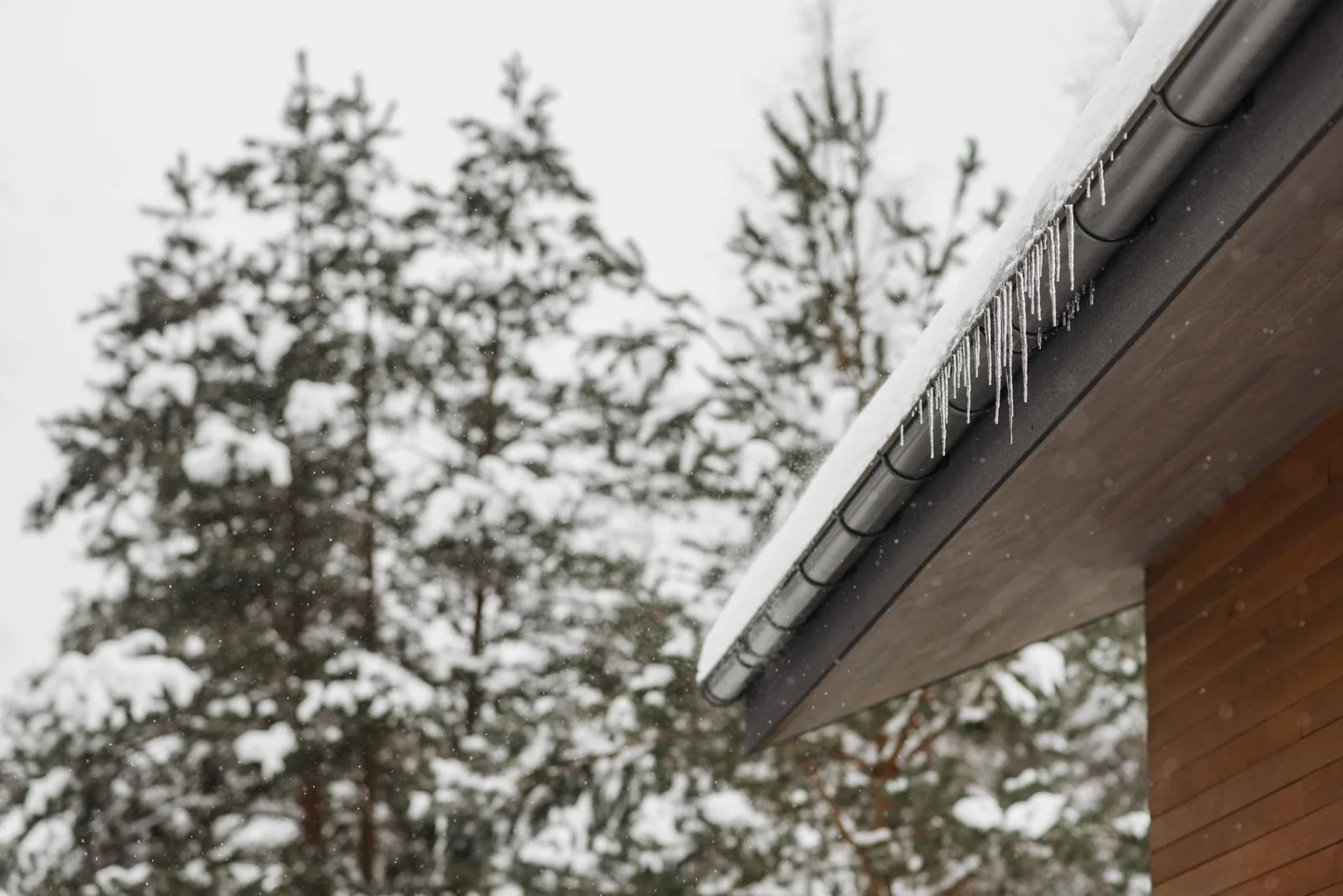
Photo by Pavel Danilyuk via Pexels
Cover Types You Will See in Stores
- Reverse-curve / hood covers: Solid metal or vinyl hoods that use surface tension. Best for heavy leaf loads, pricier to install.
- Perforated solid covers: Flat, solid tops with small slots or louvers. Middle ground between a hood and a screen.
- Gutter screens marketed as covers: Many manufacturers simply relabel a screen guard as a cover, which is why the terms blur together.
Gutter Guard vs Gutter Cover: Side-by-Side Comparison
The real difference comes down to three things: how much they cost, how well they handle the debris in your yard, and how much upkeep each one demands. Here is a quick reference table, followed by a closer look at each factor.
| Feature | Gutter Guard (mesh/screen) | Gutter Cover (reverse-curve hood) |
|---|---|---|
| Typical material | Stainless or aluminum mesh, PVC | Aluminum or vinyl solid hood |
| Debris it stops | Fine particles, needles, grit | Large leaves, twigs, shingle grit |
| DIY-friendly? | Yes, most snap or screw in | Harder—angle matters for water flow |
| Installed cost per linear foot | $2–$8 (DIY), $10–$20 (pro) | $8–$15 (DIY), $15–$30 (pro) |
| Best for | Pine, fir, and heavy needle trees | Oak, maple, and large-leaf trees |
| Main weakness | Mesh can clog with fine sludge | Water can overshoot in heavy rain |
| Lifespan | 10–25 years (metal), 3–5 (foam) | 15–30 years |
Cost: What You Will Actually Pay
For a typical 1,500-square-foot single-story home with roughly 150 to 200 linear feet of gutters, the numbers stack up quickly. A DIY micro-mesh guard runs $2 to $8 per linear foot, so $300 to $1,600 in materials alone. Professional installation with a premium system like LeafFilter or LeafGuard generally lands between $10 and $30 per linear foot, which pushes a full-house job to $1,500 to $6,000 depending on the product and your roof height.
Covers in the reverse-curve category skew higher because they are more material-intensive and harder to install correctly. A hood system professionally installed often runs $15 to $30 per linear foot. If you want the full picture of what gutters themselves cost before you add protection, our guide to gutter installation cost per foot breaks down the base numbers, and gutter guard cost per foot details protection pricing in depth.
Performance: Matching the Product to Your Trees
This is where most homeowners get it wrong. A guard that is perfect for one house is useless for another, because the debris type is different.
- Pine, spruce, and fir trees: Choose a micro-mesh guard. Needles are thin enough to slip through standard screens and solid covers’ gaps. Fine mesh is the only thing that reliably stops them.
- Oak, maple, and large-leaf trees: A reverse-curve cover works well because leaves slide off the solid surface. Screens also work but will need an occasional rinse.
- Heavy shingle grit: Micro-mesh wins here too. Grit washes through coarser screens and can accumulate in the gutter trough over time.
- Occasional light debris: A basic screen guard is plenty. Do not overpay for a premium micro-mesh system if you have one distant maple and a clear roofline.
Maintenance: No System Is Truly Maintenance-Free
Every gutter protection product gets marketed as “maintenance-free.” Treat that claim with skepticism. Guards and covers both reduce cleaning frequency, but neither eliminates it.
- Mesh guards collect a fine film of pollen and grit on top that can slow water flow, so they need a rinse every year or two.
- Foam and brush inserts degrade and should be replaced after three to five years.
- Reverse-curve covers rarely clog, but the trough underneath can still build up sediment, and the downspouts still need to stay clear.
Photo by Mathias Reding via Pexels
Installation: DIY vs Hiring a Pro
The installation path often decides which product you end up with, whether you realize it or not. Mesh and screen guards are genuinely DIY-friendly. Most snap into the gutter or screw onto the front lip with a drill, and a competent homeowner can knock out a one-story ranch in a weekend. The main risks are ladder safety and getting the slope right so water still drains toward the downspouts.
Reverse-curve covers are a different story. Because they depend on water clinging to a curve and turning into the gutter, the pitch and angle of installation have to be dialed in correctly. Install them too flat or too steep and they either overshoot water or let it run behind the gutter. That is why most hood systems are installed by trained crews, and why their labor costs are higher. If you are already redoing your gutters, pairing new seamless gutters with a matching guard system is a natural time to do it—our seamless gutters cost guide explains how that affects the overall budget.
Which Should You Choose?
The short answer: pick a micro-mesh guard if you have pine or fir trees or want a DIY job, and pick a reverse-curve cover if you have large leafy trees and are willing to pay for professional installation. Here is a simple decision path:
- Lots of pine needles or fine debris → micro-mesh guard
- Mostly large leaves, few needles → reverse-curve cover
- Tight budget, willing to DIY → aluminum screen guard
- Want the lowest-maintenance option regardless of cost → premium micro-mesh or hood, professionally installed
Whichever way you go, remember that gutters only protect your home if water can actually leave them. A clogged or undersized downspout will defeat even the best guard on the market. Take a look at downspout drainage ideas to make sure the water your new guards let through has somewhere clean to go.
Frequently Asked Questions
Are gutter guards and gutter covers the same thing?
Not exactly. A gutter cover is the broad category for any debris-blocking product installed over a gutter, while a gutter guard usually refers to a fine screen or micro-mesh style within that category. The terms are used interchangeably in stores, which is why it pays to check what material and hole size you are actually buying.
Do gutter guards work in heavy rain?
Most do, but performance varies. Fine micro-mesh can struggle to keep up with a torrential downpour, and reverse-curve covers can overshoot water if installed at the wrong angle. Look for products rated for heavy flow, and make sure your downspouts are sized to match.
How long do gutter guards and covers last?
Metal micro-mesh and aluminum hood covers typically last 15 to 30 years. Plastic screens last around 10 years, and foam or brush inserts often need replacement within three to five years.
Can I install a gutter guard myself?
Yes, for screen and micro-mesh styles. Most are designed for DIY installation on a one-story home. Reverse-curve hood covers are harder to get right, so many homeowners hire a pro for those.
Will a gutter guard eliminate gutter cleaning forever?
No. Guards and covers cut cleaning frequency dramatically, but they still need an occasional rinse to clear pollen, grit, and the fine film that builds up on top of the mesh.
The Bottom Line
Gutter guard vs gutter cover is less a battle than a choice between two good products aimed at different problems. If you want an affordable, DIY-friendly shield against pine needles and fine debris, a micro-mesh gutter guard is the practical pick. If you have large leafy trees, hate climbing ladders, and want a solid surface that nothing can cling to, a reverse-curve cover is worth the higher price tag.
Whatever you choose, buy based on the debris your roof actually produces, not on marketing claims. Match the product to your trees, keep the downspouts clear, and your gutters will do their one job—moving water away from your foundation—for decades.
For more on gutter pricing and installation, see The Spruce’s gutter guard cost breakdown and Family Handyman’s guide to gutter guards.