Downspout Drainage Ideas: 10 Ways to Move Water Away From Your Foundation
Every downspout has one job: move rainwater from your roof to a place where it can’t hurt your home. Most of them do that job poorly. A downspout that empties two feet from the foundation is quietly working against you, soaking the soil around your basement or crawl space and feeding cracks, mold, and settling over time. The good news is that the best downspout drainage ideas are mostly cheap and simple. Most cost under $50 and take less than an hour to install.
You don’t need to rip out your gutters or hire an excavator to fix bad drainage. In most cases, a $12 splash block, a $25 flexible extension, or a Saturday spent burying a pipe is all it takes to send water well away from the house. This guide walks through the options in order of effort and cost, so you can pick the fix that matches your lot, your budget, and how much rain your area actually gets.
Why Managing Downspout Runoff Is Worth the Effort
A single downspout can carry a surprising amount of water. A 2,000-square-foot roof sheds roughly 1,250 gallons for every inch of rain. If that water lands next to the foundation, it has exactly one place to go: down. Saturated soil expands and contracts as it dries, which is the slow-motion force that shifts walls, cracks driveways, and opens the joints in your foundation over time.
The damage is rarely dramatic. It shows up as a hairline crack in the basement wall, a musty smell in the crawl space, or a low spot in the yard that never seems to dry out. Left alone for a decade, chronic drainage problems are among the most expensive repairs a homeowner faces, because they touch everything from the foundation to the framing above it.
Getting the water away is also the cheapest insurance you can buy for a home. Compare a $30 downspout extension to the average cost of installing gutters or replacing a failed foundation drain, and the math isn’t close. The same logic applies to the gutters themselves: if seamless gutters are properly sized and pitched, they deliver water to the downspout correctly in the first place.
Downspout Drainage Ideas That Actually Work
The options below cover almost every situation, from a flat city lot to a sloped yard that stays wet for days after a storm. Start with the cheap, above-ground fixes and work your way up only if the water still isn’t getting far enough away.
Photo by Derwin Edwards via Pexels
Start With Grading and Slope
Before buying anything, look at the ground itself. The soil around your foundation should slope away from the house at a rate of about six inches over the first ten feet. If the grade is flat or tilts toward the house, every drainage fix you install will be fighting an uphill battle. Regrading a small section with a couple of yards of topsoil is often the single most effective thing you can do, and it costs less than most people expect.
Give the Water Somewhere to Land
The simplest fix is a splash block, a small plastic or concrete ramp that sits under the downspout elbow and pushes water a foot or two away from the wall. Splash blocks run $3 to $15 at any home center and install in two minutes. They’re enough for homes on a decent slope or in dry climates, but on a flat lot or in a wet region, a splash block alone just moves the puddle a little further from the wall.
Extend Before You Bury
Downspout extensions are the workhorse of most drainage fixes. A flexible or rigid extension attaches to the existing elbow and carries water four to twelve feet from the foundation. Flexible extensions cost $10 to $40 and bend around plantings and walkways; rigid PVC or metal extensions cost a bit more but last longer and look cleaner. For the majority of homes, an extension aimed onto a sloping lawn is all the drainage you’ll ever need.
Above-Ground Fixes: Extensions, Splash Blocks, and Roll-Ups
If you can’t bury a pipe, an above-ground extension is your best option. The key is getting the water far enough away and making sure it flows downhill the entire way. A common mistake is running an extension that’s too short, or resting the end on a high spot so water runs back toward the house.
- Splash blocks ($3–$15): best for a mild slope where water already drains reasonably well.
- Flexible extensions ($10–$40): easy to bend around landscaping; ideal for most homes.
- Rigid PVC or metal extensions ($20–$60): cleaner look and longer life; better for visible front-yard downspouts.
- Roll-up extensions ($15–$35): attach to the elbow and roll open only when it rains, so they stay out of the way the rest of the time.
The angle matters more than the material. A downspout that discharges onto flat ground will pool no matter how fancy the extension is. Keep a steady downhill slope, and aim the outlet toward a drainage swale, a curb, or at least the far edge of the lawn. Forget to check the slope and you’ll just be moving the problem a few feet further out.
Burying the Water: Underground Drains and Pop-Up Emitters
When above-ground extensions won’t work — a walkway in the way, a flat yard, a homeowner association that doesn’t love visible pipes — the next step is to run the water underground. A buried drain line typically uses 4-inch PVC or corrugated pipe that runs from the downspout, under the ground, to a discharge point like a pop-up emitter or a curb cut.
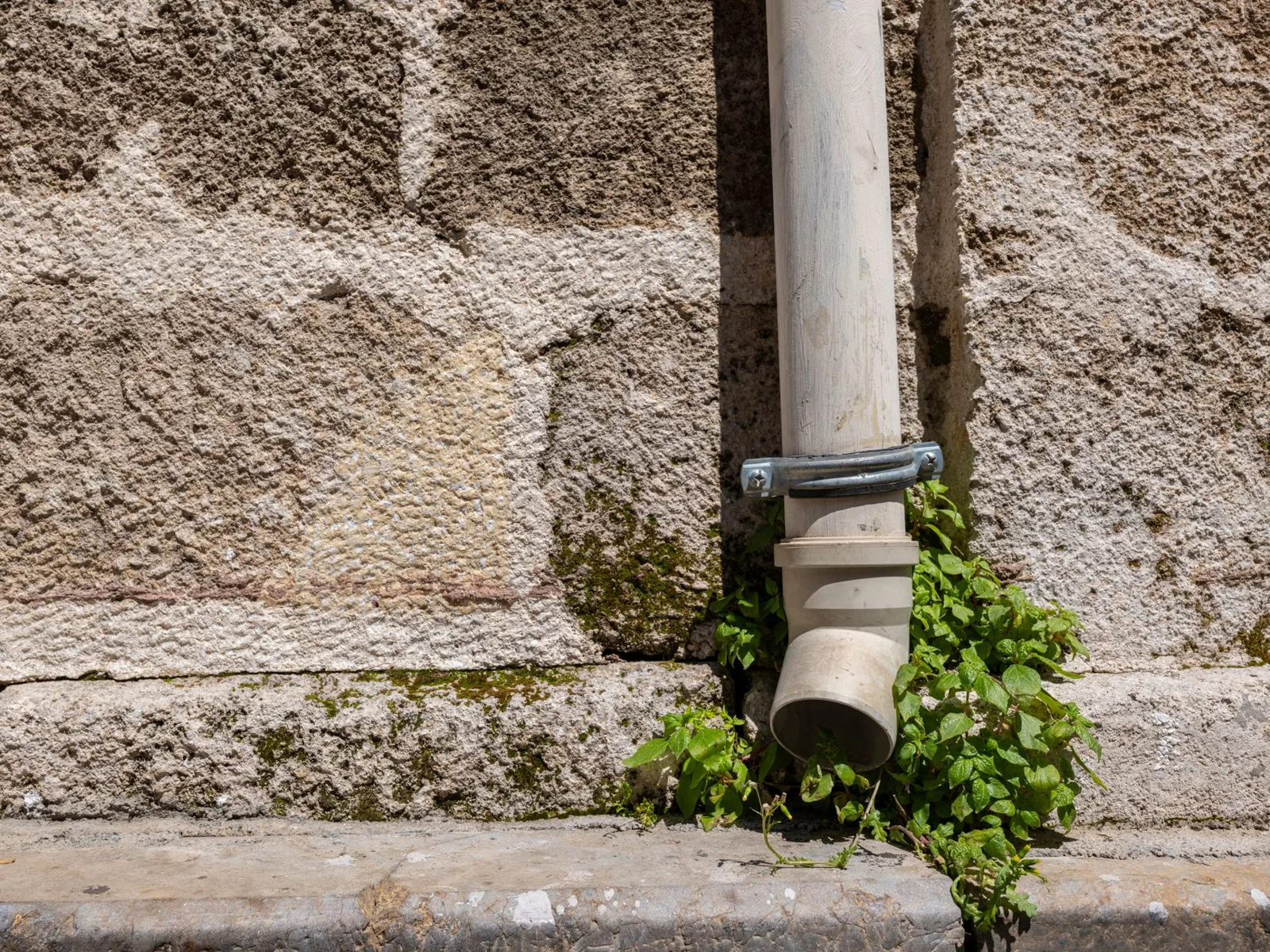
Photo by Engin Akyurt via Pexels
The cleanest setup ends in a pop-up emitter, a low-profile cap that sits flush with the lawn and opens when water pressure builds during a storm. Between downpours it’s practically invisible. Burying pipe is more work than clipping on an extension — you’ll dig a trench at least a few inches deep with a steady slope, normally about one to two inches of fall per ten feet of run — but it’s still a DIY weekend job for most homeowners.
Two rules keep buried drains from becoming headaches. First, use solid pipe, not the perforated “French drain” style, when you’re directly connected to a downspout; perforated pipe is meant to collect groundwater along its length, not carry roof runoff. Second, mark where the pipe runs before you backfill, so a future fence post or planting doesn’t puncture it.
Rain Barrels, Dry Wells, and Rain Gardens
If you’d rather keep the water on your property than pipe it away, three options turn runoff into a resource or let it soak in safely.
- Rain barrels ($50–$150): a barrel under the downspout captures roof runoff for watering the garden. They’re great for saving water but poor as a standalone drainage fix: once full, a barrel overflows right where it sits, so pair it with a proper overflow hose aimed away from the house.
- Dry wells ($200–$900 installed): an underground basin filled with gravel that collects runoff and lets it percolate into the soil slowly. They work well on smaller lots with nowhere to discharge, but they need to sit at least ten feet from the foundation and you’ll need to know your soil drains.
- Rain gardens ($3–$10 per square foot): a shallow, planted depression that collects runoff and filters it through plants and soil. They look better than any pipe, but they take planning and only handle the volume of an average storm.
Any of these can complement a good extension. Run the downspout into a rain barrel, and send the barrel’s overflow ten feet away, and you’ve solved drainage while cutting your water bill at the same time.
Above-Ground vs. Underground: A Quick Comparison
Not sure where to start? The table below lines up the three most common approaches side by side.
| Feature | Splash Block | Downspout Extension | Buried Drain (Pop-Up) |
|---|---|---|---|
| Material cost | $3–$15 | $10–$60 | $150–$800+ |
| How far it moves water | 1–3 ft | 4–12 ft | 10–50+ ft |
| Install time | 2 minutes | 15–30 minutes | Half a day or more |
| Visibility | Low-profile | Visible pipe/ramp | Nearly invisible |
| Best for | Dry climates, good slope | Most homes | Flat lots, big roofs, wet yards |
If the goal is simply stopping water at the foundation on a typical sloped lot, a $25 extension is usually enough. Reserve the buried drain for flat ground or heavy rainfall, and reach for a dry well or rain garden when you want to keep the water on site. Whichever route you take, protecting your gutter system matters too — gutter guards keep debris from clogging the downspout at the top, which is where a lot of drainage problems actually begin.
Frequently Asked Questions
How far should a downspout drain from the house?
Aim for at least four to six feet, and ten feet is better. As a rule of thumb, water discharged within three feet of the foundation can still saturate the soil against the wall, especially on a flat lot. The further the better, as long as the grade carries it away.
What is the cheapest way to extend a downspout?
A flexible vinyl downspout extension is the cheapest real fix at roughly $10 to $40, and it needs no special tools. A $5 splash block is cheaper still but only moves water a foot or two, which isn’t enough on flat ground or in wet climates.
Can I bury my downspouts myself?
Yes. The diy version is a shallow trench, four-inch solid PVC, and a pop-up emitter or curb outlet at the end. The main job is digging the trench with a steady downhill slope. If your lot drains poorly or your local code requires a permitted connection to the storm sewer, plan to bring in a pro.
How do I stop a downspout from pooling water at the base?
Pooling right under the elbow almost always means the ground is flat or the outlet is too high. Add an extension aimed downhill, or install a splash block on a properly graded patch. If the puddle persists after a good storm, the grade itself needs fixing before the pipe will help.
Are rain barrels a good drainage solution?
They’re a useful addition, not a full solution on their own. A barrel saves water for the garden, but it fills up during a long rain and overflows exactly where it sits. Route the overflow well away from the foundation and a rain barrel becomes a solid part of a larger drainage plan.
For routing and freeze protection, Family Handyman covers downspout drainage solutions.
The Bottom Line
Most drainage problems look worse than they are. The water pooling at your foundation usually isn’t a sign that you need an expensive system; it’s a sign that the downspout is simply dumping water too close to the house. A $25 extension aimed downhill fixes a surprising number of them in one afternoon.
Work top-down: check the grade first, then get the water four to ten feet from the wall, and only reach for a buried drain or a dry well if the cheap fixes clearly aren’t enough. While you’re at it, make sure the gutters feeding the downspout are the right size and cost for your roofline, since a downspout can only move as much water as the gutter above it delivers. Get the drainage right once, and you’ll protect the foundation — the most expensive part of the house to fix — for the life of the home.