
Half Round vs K Style Gutters: Which Is Right for Your Home?
When you picture gutters on a house, you are almost certainly picturing K-style gutters—the flat-backed, crown-molded profile that has been the American default for decades. Walk through an older neighborhood of brick and stone homes, though, and you will spot the other option: half-round gutters, a simple semicircular trough that has been carrying water off roofs since long before K-style existed. The half round vs k style gutters decision comes down to more than looks; it changes your cost, your water capacity, and how often you will be on a ladder clearing debris.
Both profiles do the same basic job of collecting rainwater at the roofline and steering it away from your foundation. Where they differ is in shape, price, and behavior in a storm. K-style holds more water per inch of width and costs less, which is why it dominates new construction. Half-round drains more cleanly, reads as period-correct on historic architecture, and carries a noticeably higher price tag for both materials and labor.
This guide puts the two profiles side by side so you can decide based on your house, your climate, and your budget—not on whichever style the salesperson happens to stock.
What Is a Half-Round Gutter?
A half-round gutter is exactly what the name says: a trough shaped like a half circle, open at the top, with a smooth, unbroken interior curve. It has no flat surfaces and no sharp inside corners. Water and whatever debris lands in it slide along that smooth curve toward the downspout instead of catching in crevices.
This is the older of the two designs. You see half-round gutters on Colonial, Tudor, Craftsman, Mediterranean, and brick ranch homes, where the clean semicircle echoes the rounded trim and soft lines of the architecture. Because of that association, many municipalities in historic districts require half-round gutters on renovations and new builds within the district’s boundaries.
Half-round gutters are almost always made from metal—copper, aluminum, galvanized steel, or zinc. Copper half-round is especially popular on high-end and historic homes because of the way it weathers into a green patina. Because the profile is open and rounded, it also tends to be the profile paired with exposed round downspouts, which completes the traditional look.
What Is a K-Style Gutter?
K-style gutters get their name from their profile. Viewed from the end, the shape loosely resembles the letter K: a flat back that sits against the fascia board, a flat bottom, and a front face that is stepped and shaped to look like decorative crown molding. That molded front is the giveaway when you look at most suburban houses today.
The design came out of the mid-20th century as a way to squeeze more capacity out of a smaller, cheaper piece of metal. The flat bottom and angled front let a K-style gutter hold significantly more water than a half-round gutter of the same width, which lets manufacturers sell a 5-inch gutter that performs like a 6-inch half-round.
K-style gutters are sold in aluminum, galvanized steel, vinyl, and copper, with seamless aluminum the most common on modern homes. The flat back also makes them easier to mount directly to a fascia board with hidden hangers, which is a big part of why they are cheaper and faster to install than their rounder cousin.

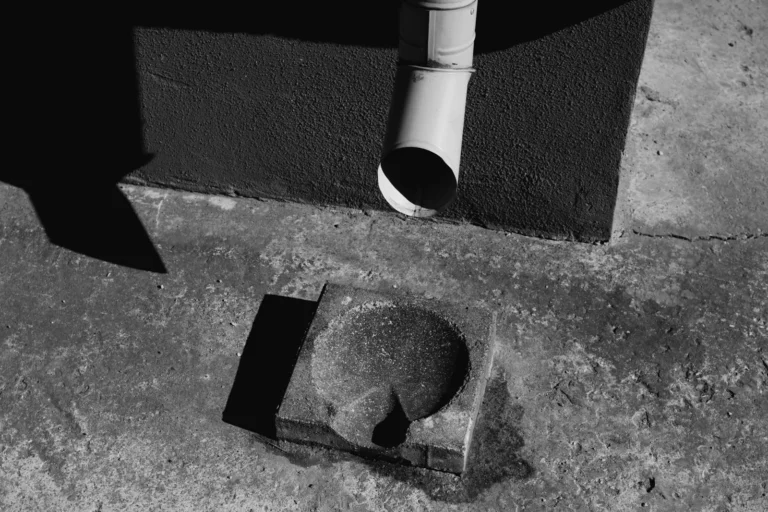
Photo by Valentin Ivantsov via Pexels
Half Round vs K Style Gutters: Side-by-Side Comparison
The practical differences between the two profiles come down to four things: what you pay, how much water each one carries, how they handle debris, and how they look against your house. Here is the quick reference, with a closer look at each factor below.
| Feature | Half-Round Gutter | K-Style Gutter |
|---|---|---|
| Shape | Smooth semicircle, no flat surfaces | Flat back and bottom, crown-molded front |
| Water capacity | Lower per inch of width | Higher—5″ K-style ≈ 6″ half-round |
| Installed cost per foot | $8–$25 (aluminum to copper) | $4–$12 for standard aluminum |
| Typical materials | Copper, aluminum, steel, zinc | Aluminum, vinyl, steel, copper |
| Debris handling | Smooth interior, debris washes through | Inside corners can trap leaves and grit |
| Home style fit | Historic, brick, period architecture | Modern, suburban, most new builds |
| Hanging method | Exterior brackets or roof straps | Hidden hangers into the fascia |
| Lifespan (metal) | 20–50+ years (copper longer) | 20–30 years for aluminum |
Cost: What Each Profile Actually Costs
Half-round gutters cost more than K-style, and the gap widens at every stage of the job. Standard 5-inch K-style aluminum runs $4 to $12 per installed linear foot, which puts a typical 150- to 200-foot home at roughly $900 to $2,400. Half-round aluminum starts around $8 to $15 per foot, and half-round copper can push $25 to $40 per foot—a full-home copper install easily lands between $5,000 and $8,000.
The premium is not just material. Half-round requires twice as many hangers because the open shape needs support on both the inside and outside edges, and it is usually hung with exposed brackets or roof straps rather than quick hidden hangers. That extra hardware and slower install adds roughly 30% to 50% to labor. For the full picture of what gutters cost before you choose a profile, see our gutter installation cost per foot breakdown.
Water Capacity: Shape Determines Flow
Here is the single most practical difference: a 5-inch K-style gutter carries about the same volume of water as a 6-inch half-round gutter. The flat bottom and deeper front wall of the K-style simply hold more.
That matters in a downpour. If you want the traditional half-round look on a home with a large roof or long runs, you often have to upsize to 6-inch half-round to match the flow a 5-inch K-style delivers—and the larger size costs more. In regions with heavy, concentrated rainfall, capacity should drive your decision more than appearance. In snow country, K-style’s sturdier, folded shape also holds up slightly better under the weight of ice and sliding snow, though a properly hung half-round system handles winter fine.
Maintenance: One Cleans Up Easier
Half-round gutters have a real advantage here. The smooth, seamless interior curve means leaves, pine needles, and grit slide toward the downspout instead of lodging in corners. There is simply nowhere for debris to catch the way it does in the inside corners of a K-style profile.
K-style gutters work, but those flat-bottomed inside corners and the creases in the molded front collect wet leaves and shingle grit. Left alone, the buildup holds moisture against the metal and speeds corrosion. Neither profile is maintenance-free—both still need cleaning and clear downspouts—but half-round generally needs less frequent, less frustrating clearing. If keeping debris out entirely is your priority, compare the options in our gutter guard cost per foot guide before you commit.
Appearance and Home Style
This is usually the deciding factor once the numbers are on the table. K-style gutters look right on modern and suburban homes; their crown-molded front blends with the trim on most houses built after 1950. Half-round gutters look wrong on a contemporary house but perfect on a brick Georgian, a stone Tudor, or a stucco Mediterranean, where the round profile matches the architecture’s curved details.
If you are in a designated historic district, the choice may already be made for you—many preservation boards require half-round gutters. If not, the rule of thumb is simple: match the profile to the age and character of the house, not to a photo you saved on a phone.

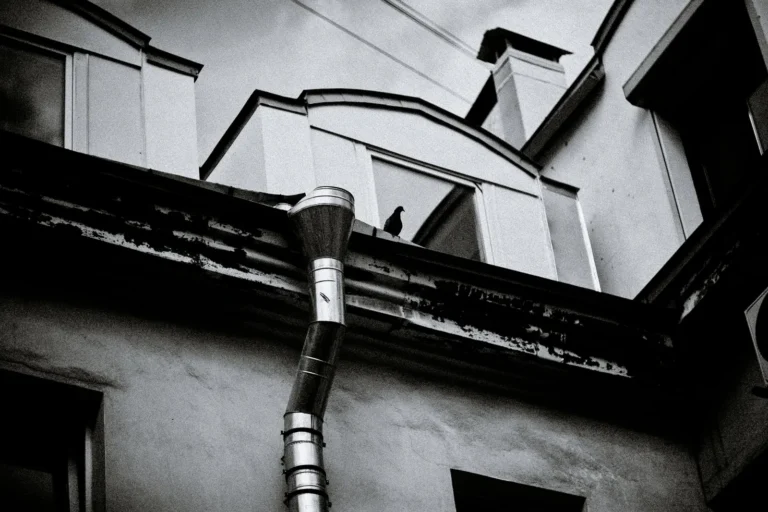
Photo by Ingo Zoll via Pexels
Installation: Brackets, Hangers, and Labor
How the two profiles get mounted explains a lot of the price difference. K-style gutters hang with hidden hangers that screw directly through the back wall into the fascia board, which is fast and forgiving. A crew can run seamless K-style aluminum down an entire roofline in a few hours.
Half-round gutters need a different approach. Because the profile is open and rounded, it is supported by exterior brackets—often decorative half-round brackets—or by roof straps that loop over the front lip and anchor under the shingles. That means more hardware, more precise spacing, and more time on the ladder. The brackets also become a visible design feature, which is why copper half-round with ornate brackets is a signature look on restored homes.
If you are leaning toward seamless gutters for the clean look, be aware that half-round is harder to produce as a true seamless run in the field, so it is more often sectional. Seamless aluminum is the domain of K-style. Our seamless gutters cost guide covers what that option adds to the budget.
Which Profile Should You Choose?
The honest answer depends on three things—your home’s style, your rainfall, and your budget.
- Choose K-style if you have a modern or suburban home, want the lowest installed cost, or live where downpours are heavy and you need the extra capacity of a 5-inch profile.
- Choose half-round if you have a historic, brick, or period home, live in a district that requires it, or are willing to pay more for the cleaner traditional look and easier maintenance.
- Choose half-round copper if you are restoring a high-end home and want gutters that last 50 to 100 years and improve with age.
- Choose 6-inch half-round if you want the traditional look but need K-style-level water capacity on a large roof.
Whichever way you go, remember that gutters only protect your home if the water can actually leave. A profile that dumps water at the foundation is pointless. Take a look at our downspout drainage ideas to make sure the runoff has a clean path away from the house.
Frequently Asked Questions
Which is better, half-round or K-style gutters?
Neither is universally better. K-style holds more water per inch and costs less, making it the practical default for most modern homes. Half-round drains more cleanly, looks period-correct on historic architecture, and costs more to buy and install. The right choice follows your home’s style and your climate.
Why are half-round gutters more expensive?
Two reasons. The open, rounded profile needs more support—roughly twice as many hangers or brackets—and it is usually installed with exterior brackets or roof straps rather than quick hidden hangers. Both add material and slow down labor, pushing installed cost 30% to 50% above K-style.
Do half-round gutters clog less than K-style?
Generally yes. Half-round has a smooth, unbroken interior with no inside corners, so leaves and needles wash toward the downspout instead of lodging in crevices. K-style’s flat bottom and molded front create corners where wet debris collects, so it needs more frequent clearing.
Can I put half-round gutters on a modern house?
You can, but it rarely looks right. Half-round reads as traditional and pairs best with brick, stone, and period trim. On a contemporary or suburban house, K-style blends with the existing lines. Unless a historic district requires half-round, most pros will steer modern homes toward K-style.
Do K-style gutters hold more water?
Yes. Because of the flat bottom and deeper front wall, a 5-inch K-style gutter carries roughly the same water volume as a 6-inch half-round gutter. That is why upsizing to 6-inch half-round is common when you want the traditional look on a large roof.
How long do half-round and K-style gutters last?
Aluminum K-style gutters typically last 20 to 30 years. Half-round in aluminum or steel lasts about the same, but half-round copper is the longevity champ at 50 to 100 years with almost no maintenance—one reason it is the standard on restored historic homes.
The Bottom Line
Half round vs k style gutters is less a contest than a matchmaking exercise. K-style is the economical, high-capacity workhorse that belongs on most modern and suburban homes. Half-round is the traditional profile that looks right on historic and brick architecture, drains more cleanly, and justifies its higher price with lower maintenance and—in copper—a lifespan measured in generations.
Start with your house: its age, its style, and how much rain your roof has to shed. Let those answers pick the profile, then get three itemized quotes so every bid covers the same material and size. For a deeper look at the numbers, see Family Handyman’s guide to gutter types and Bob Vila’s breakdown of gutter styles. A gutter is a boring purchase until a storm rolls through and your fascia and foundation stay dry—that is the day the profile you chose stops being a debate and starts being money well spent.