Sunroom Cost to Build: What You’ll Really Pay in 2025
The average sunroom cost to build lands between $20,000 and $70,000 in 2025, with most homeowners spending roughly $35,000 for a standard 12-by-12-foot three-season room. That’s a wide range because a sunroom is not one product — it can be a simple prefab kit screwed onto an existing deck or a fully insulated, climate-controlled four-season addition with its own HVAC.
Where your project falls in that range depends almost entirely on four things: the type of sunroom you choose, its square footage, the quality of glass and framing, and how much site work your foundation requires. Below, I’ll break down each of those levers with real numbers so you can price your project without guessing.
Before you commit to a number, know this: a sunroom typically costs less per square foot than a conventional stick-built addition, and it usually recovers a larger share of its cost at resale. That makes it one of the more practical home upgrades available — provided you understand what you’re actually paying for.
How Much Does a Sunroom Cost to Build?
A safe national average for a mid-size sunroom is $30,000 to $60,000, but averages hide a lot. The same 200-square-foot space can cost $12,000 as a three-season kit room or $80,000 as a four-season glass solarium with radiant floor heat. Here is how the numbers break down at a glance:
| Sunroom Type | Typical Size | Average Cost Range | Cost per Sq Ft |
|---|---|---|---|
| Screen room / patio enclosure | 100–200 sq ft | $5,000–$20,000 | $50–$150 |
| Three-season sunroom (prefab kit) | 120–300 sq ft | $15,000–$40,000 | $100–$250 |
| Four-season sunroom (addition) | 150–400 sq ft | $30,000–$80,000 | $200–$400 |
| Glass solarium / conservatory | 150–400 sq ft | $40,000–$100,000+ | $250–$500+ |
A few caveats on those numbers. First, labor runs 30% to 50% of a sunroom’s total cost, which is why DIY kits undercut contractor-built rooms by tens of thousands of dollars. Second, regional pricing matters: the same room built in the Northeast or coastal California will cost noticeably more than one in the Midwest or South. Third, these figures assume no surprises under the surface — bad soil, rot, or a failing deck frame will push any estimate up.
If you want a deeper look at how pricing breaks down by unit, our guide to the sunroom cost per square foot walks through the math for every common size.
Sunroom Cost to Build by Type
The single biggest decision you’ll make is what kind of sunroom to build, because the type dictates the framing, the glass, the foundation, and whether you need heating and cooling.
Three-Season Sunrooms
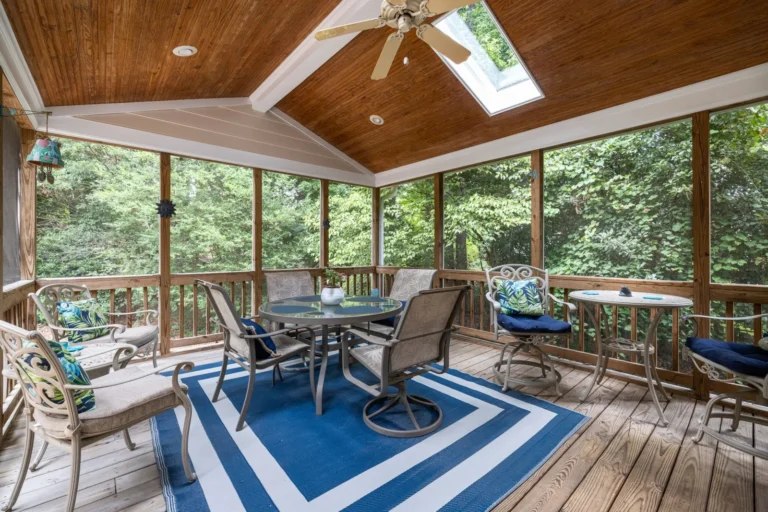
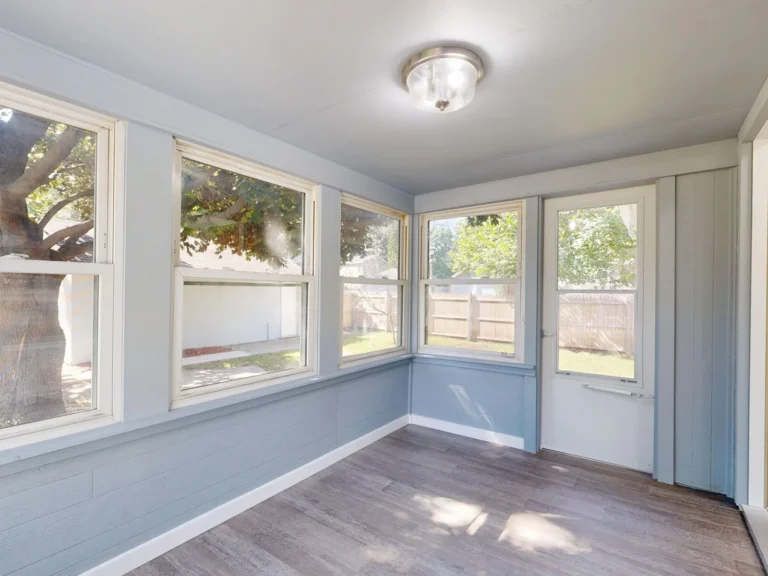
A three-season room is the workhorse of the category. It’s built from an insulated roof and aluminum, vinyl, or wood frame with single- or double-pane glass, and it’s designed for spring, summer, and fall — not freezing winters. Expect to pay $15,000 to $40,000 for a contractor-built room, or $8,000 to $25,000 for a prefab kit you assemble with a helper or two.
Three-season rooms don’t require a full HVAC tie-in, which is a big part of why they’re affordable. Many owners heat the space with a portable space heater or a small ductless mini-split. If you’re pricing out a turnkey build rather than a kit, how much a new sunroom costs with a contractor is worth reviewing first.
Four-Season Sunrooms
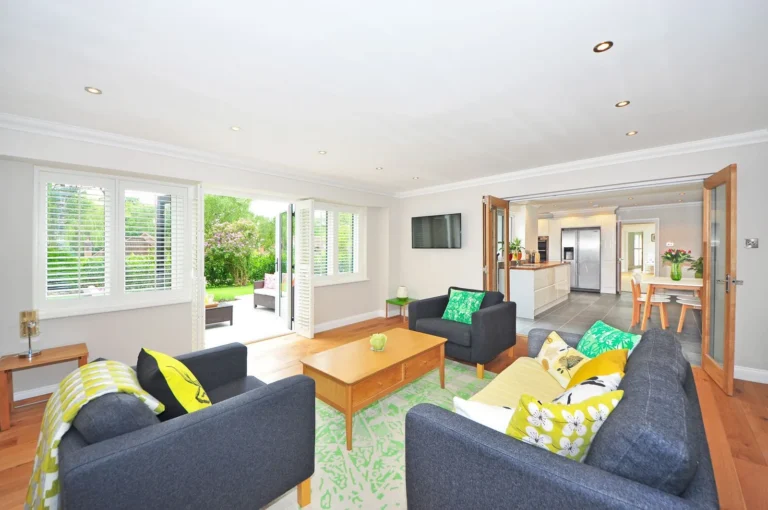
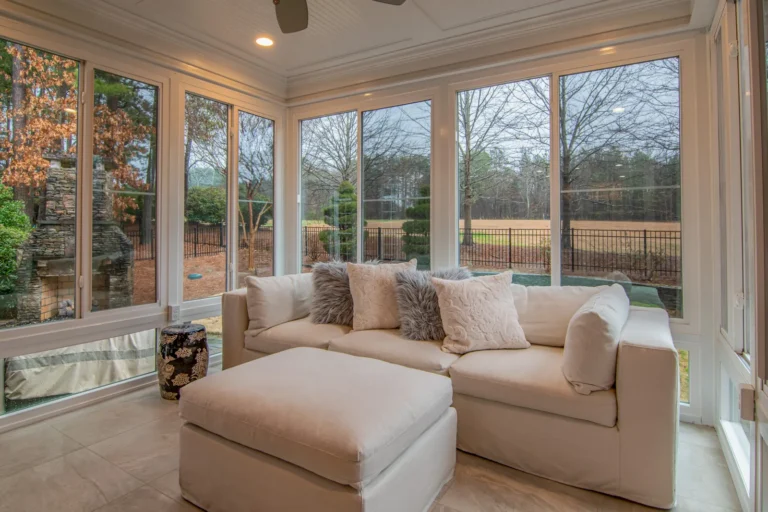
A four-season sunroom is effectively a year-round room addition. It gets insulated walls, Low-E double- or triple-pane glass, a proper foundation, and a connection to your home’s heating and cooling. That pushes the price to $30,000 to $80,000, and premium builds with high-end windows, skylights, and radiant floor heat can clear six figures.
This is the option to choose if you want usable square footage in January rather than a room that sits empty for four months. It also counts more like finished living space when an appraiser evaluates your home.
Glass Solariums and Conservatories
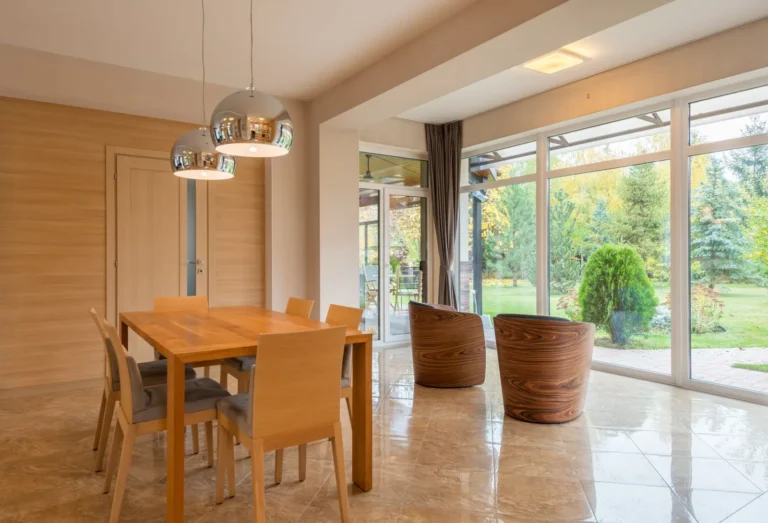
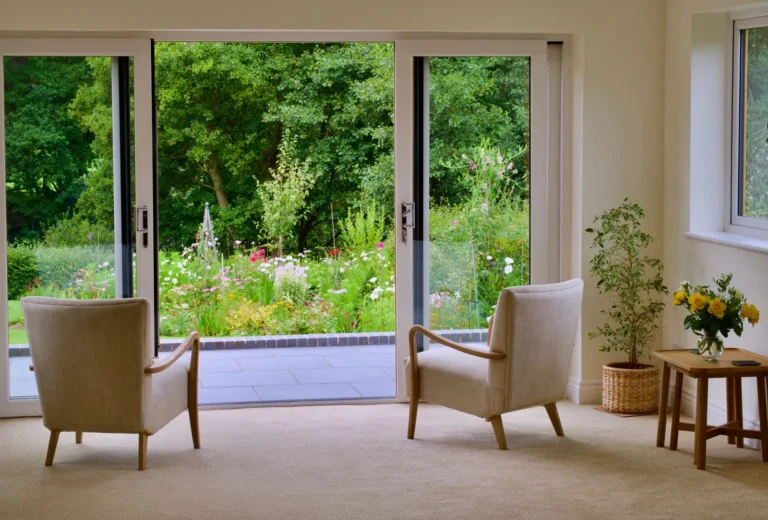
Solariums — the near-total-glass structures with glass roofs — and conservatories sit at the top of the price curve. A solarium starts around $40,000 and a traditional wood-and-glass conservatory can run $60,000 to $150,000 or more. The cost is driven by the amount of glazing, the structural aluminum or wood framing, and the engineering required to hold up a glass roof.
These are statement pieces. They photograph beautifully and add real curb appeal, but they’re also the most expensive per square foot and the most expensive to heat and cool.
Screen Rooms and Patio Enclosures
At the budget end, a screen room or patio enclosure runs $5,000 to $20,000. It’s a simple aluminum or wood frame with screen panels, sometimes with a solid roof and lightweight vinyl windows. It won’t insulate you from cold, but it keeps out insects and gives you three usable seasons at a fraction of the cost of glass.
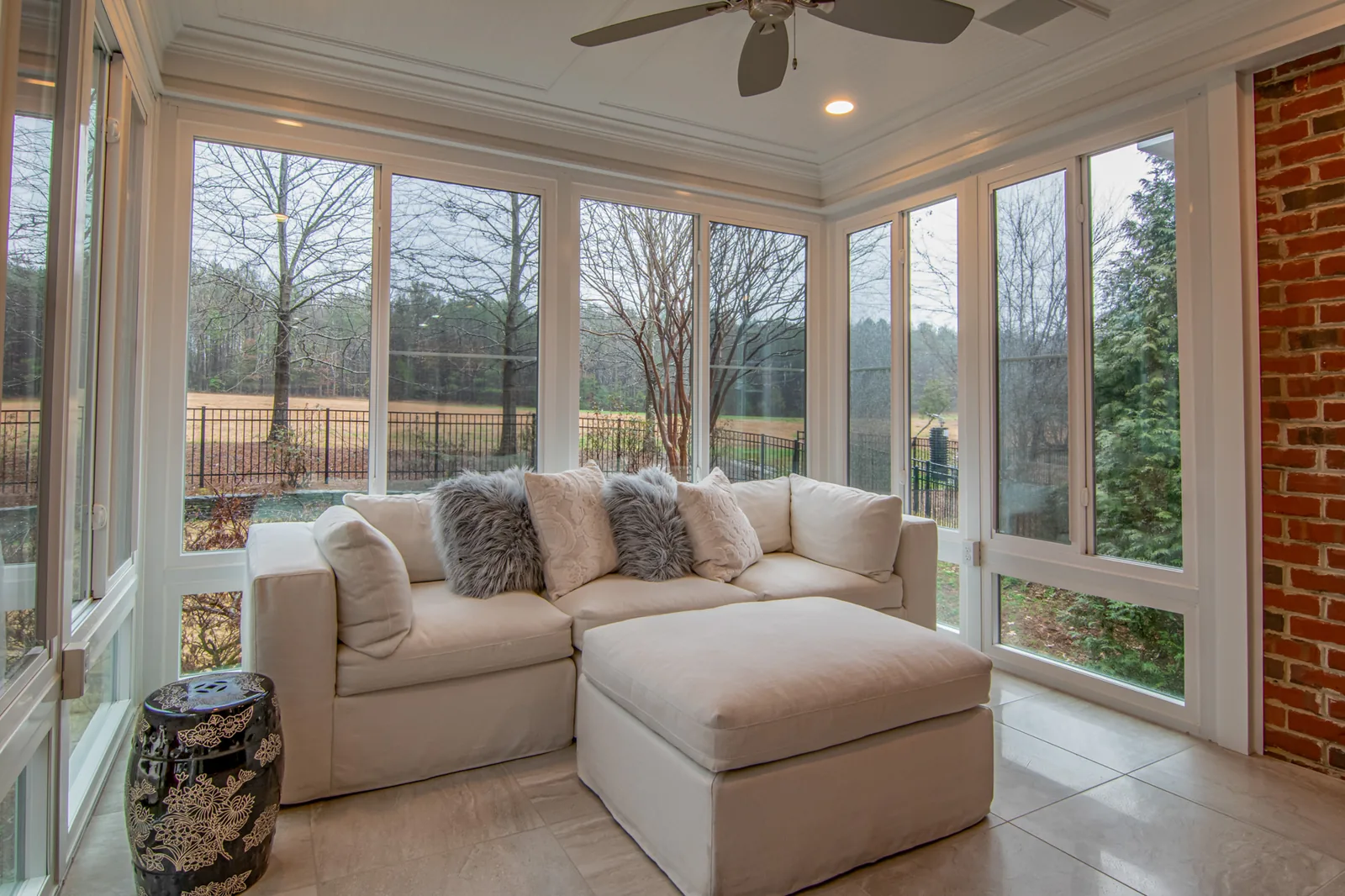
Photo by Curtis Adams via Pexels
What Drives the Price Per Square Foot
Beyond type, several line items quietly inflate your final invoice. Understanding them is the difference between an accurate budget and a nasty surprise.
Glass and Glazing
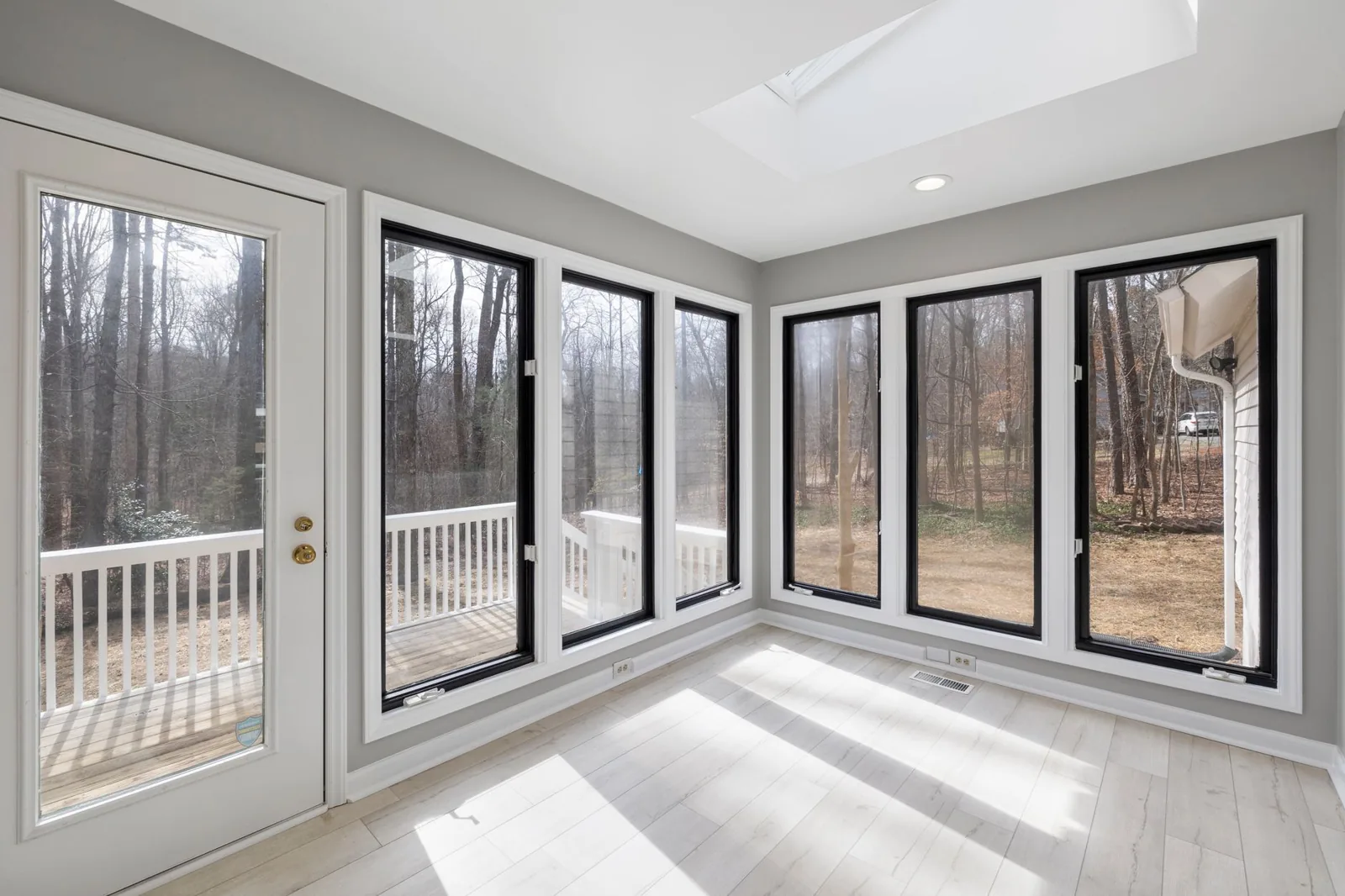
Glass is the single most expensive material in any sunroom. Single-pane is cheapest but nearly useless in hot or cold climates. Double-pane insulated glass adds $10 to $25 per square foot over single-pane, and triple-pane or Low-E coated glass adds more. Plan on spending $25 to $80 per square foot on glazing alone for a quality room.
Foundation and Site Prep
A slab-on-grade foundation runs $4 to $8 per square foot, or roughly $1,000 to $6,000 for a typical room. A crawl space or frost-protected footing costs more. If your existing deck can’t support the added load — a common issue — you’ll pay extra to reinforce or replace it, and that can add $3,000 to $10,000 before a single pane of glass goes up.
Framing and Roof
Vinyl and aluminum framing are the most affordable and lowest-maintenance options. Wood framing looks better and insulates well but costs more and needs upkeep. A solid insulated roof costs more than a single-layer aluminum roof, but it’s worth it if you plan to use the room year-round.
Electrical and HVAC
Running electrical to a new sunroom costs $500 to $3,000 depending on distance from the panel and how many circuits you need. A ductless mini-split for heating and cooling adds $2,000 to $7,000. If you want to tie into existing HVAC ductwork, budget more, since most systems aren’t sized for the extra load.
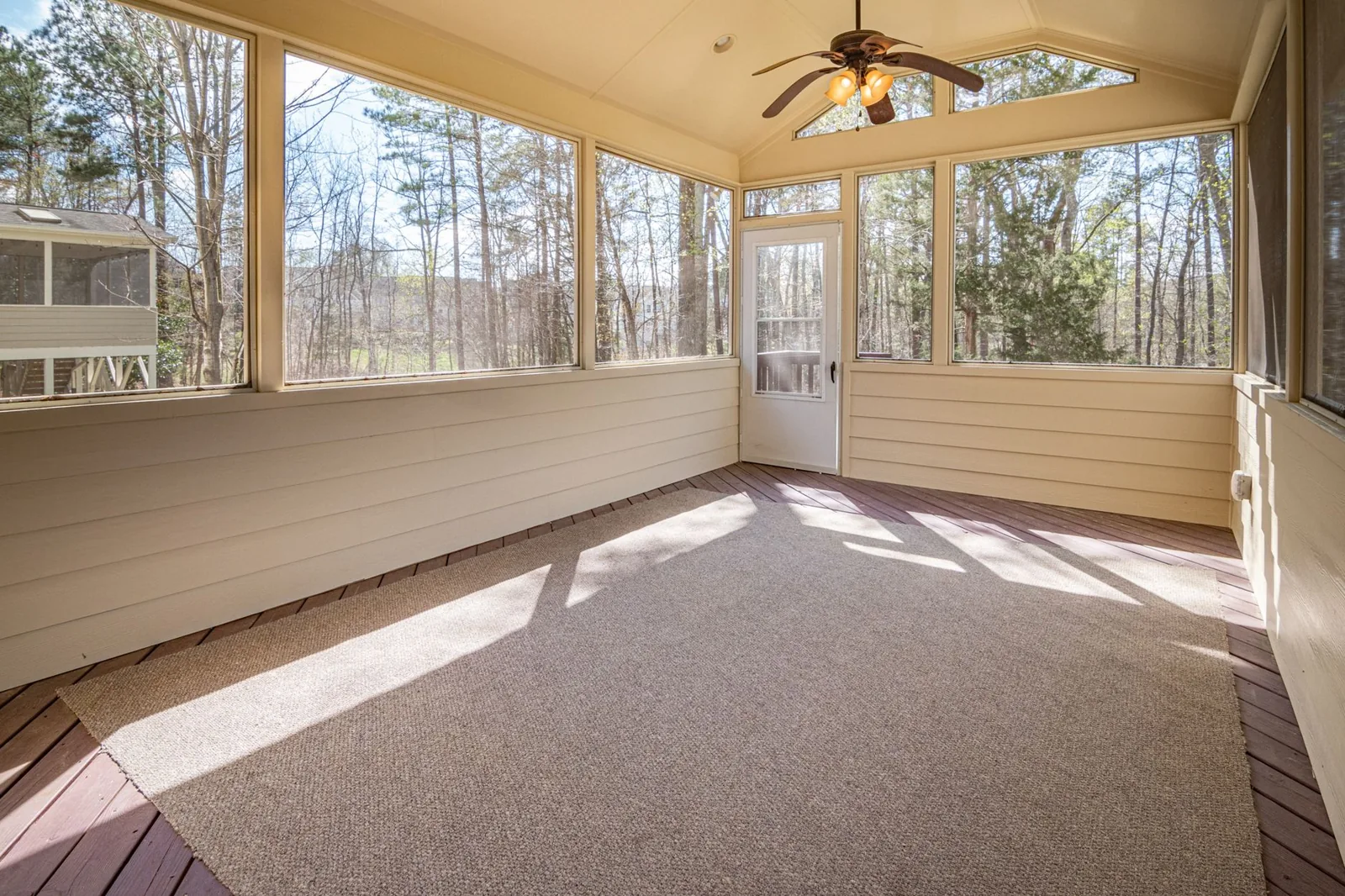
Photo by Curtis Adams via Pexels
Sunroom Cost to Build by Size
Square footage scales the total price almost linearly, which makes ballparking easy. Here’s what to expect for common footprints, assuming a mid-range three-season build:
| Room Size | Square Footage | Three-Season Estimate | Four-Season Estimate |
|---|---|---|---|
| 8×10 ft | 80 sq ft | $8,000–$20,000 | $16,000–$32,000 |
| 12×12 ft | 144 sq ft | $14,000–$36,000 | $29,000–$58,000 |
| 12×16 ft | 192 sq ft | $19,000–$48,000 | $38,000–$77,000 |
| 16×20 ft | 320 sq ft | $32,000–$80,000 | $64,000–$128,000 |
Note that the cost per square foot actually decreases slightly as the room gets larger, because fixed costs like permits, delivery, and site mobilization get spread over more space. A 320-square-foot room is cheaper per foot than an 80-square-foot one, even though the total is higher.
Labor is another size-sensitive factor. Sunroom installation cost — how much the crew charges to assemble, seal, and finish the room — can equal the price of the kit itself on smaller projects.
DIY Kit vs. Hiring a Contractor
A prefab sunroom kit can cut your total cost by 40% to 60%, and that’s a meaningful amount of money. A $25,000 three-season room from a company like Sunroom Guy or TEMO might be $12,000 to $15,000 as a kit, leaving you to handle assembly.
But DIY sunrooms are not a weekend project. Most kits require two to four competent people, a level and properly anchored foundation, and careful flashing around every roof and wall joint — a bad seal leaks, and a leaking sunroom is worse than no sunroom at all. Kits also rarely include electrical, HVAC, or permits, all of which you’ll arrange separately.
Hiring a licensed contractor costs more up front but shifts the risk. A pro handles permits, code compliance, foundation work, and warranty-backed installation. If you’re building a four-season room with a real foundation and an HVAC tie-in, hire the contractor. Save DIY for a straightforward three-season kit on an existing, sound deck.
How to Keep Your Sunroom Budget in Check
None of these tactics require cutting corners; they just require making deliberate choices early.
- Build a three-season room instead of four-season. It’s the single largest lever — often a $20,000 difference.
- Use a prefab kit on an existing concrete patio or reinforced deck to skip foundation costs entirely.
- Go double-pane, not triple-pane unless you live in an extreme climate. The extra glass cost rarely pays for itself.
- Skip the HVAC tie-in. A $1,500 mini-split or even a quality space heater covers a three-season room for far less than extending ductwork.
- Time the build for the off-season. Contractors often discount labor in late fall and winter when demand drops.
- Get three written quotes. Sunroom pricing varies wildly between companies; a 20% spread on a $40,000 job is $8,000 in your pocket.
Frequently Asked Questions
Is a sunroom cheaper to build than a room addition?
Yes, in most cases. A conventional stick-built addition runs $150 to $350 per square foot, while a three-season sunroom lands between $100 and $250. The savings come from lighter framing, no full HVAC tie-in, and standardized prefab components.
How long does it take to build a sunroom?
A prefab kit can go up in a week or two with a competent crew. A contractor-built three-season room typically takes two to four weeks, and a four-season addition with foundation work and HVAC can take six to ten weeks.
Do I need a permit to build a sunroom?
Almost always, yes. Sunrooms are attached structures, so they trigger building permits for the structure, and usually electrical permits as well. Your contractor should pull these; if you’re doing a DIY kit, check with your local building department before ordering anything.
Does a sunroom add value to my home?
Generally, yes. A well-built sunroom typically recoups 50% to 60% of its cost at resale, and a four-season room that reads as finished living space can do better. Curb appeal and usable square footage both factor into an appraiser’s valuation.
What is the cheapest type of sunroom to build?
A screen room or patio enclosure is the cheapest at $5,000 to $20,000, followed by a three-season prefab kit. Both give you three usable seasons without the cost of insulated glass, a full foundation, or an HVAC connection.
The Bottom Line
The sunroom cost to build runs from about $5,000 for a simple screen enclosure to well over $100,000 for a glass conservatory, with most homeowners spending between $20,000 and $70,000 for a mid-size room. The type you choose, the size, the glass, and the foundation work are what move the number.
Decide first whether you want three usable seasons or four, get written quotes from at least three companies, and resist the urge to overbuild. According to the renovation experts at This Old House, the most common budgeting mistake homeowners make is underestimating site work and delivery — so build a 15% contingency into whatever figure you land on, and you’ll come out ahead.
Ready to see how your space compares? Start with the sunroom cost per square foot for your exact footprint, or compare a sunroom against a traditional sunroom vs. addition to confirm you’re making the right call.