
Prefabricated Sunroom Kits Cost: A 2026 Buyer’s Price Guide
Prefabricated sunroom kits cost less than a fully custom-built sunroom, which is exactly why so many homeowners start here. Depending on the kit grade, size, and whether you assemble it yourself or hire a contractor, you can expect to spend anywhere from about $6,000 for a basic DIY three-season kit to $50,000 or more for a turnkey four-season room with premium glazing.
The appeal is straightforward: kits arrive pre-cut and pre-engineered, so you skip the architect’s fee and much of the custom fabrication cost. But “kit” pricing is easy to misread. The sticker price on the box rarely covers the foundation, permits, electrical, or labor — and those hidden costs are where budgets usually blow past the estimate you found online.
This guide breaks down real prefabricated sunroom kits cost figures by material, size, and season rating so you can plan a realistic budget before you order anything.
What a Prefabricated Sunroom Kit Actually Includes
A kit is not a finished room dropped on your lawn. Most prefabricated sunroom kits contain the structural shell only: the aluminum or vinyl framing, glass or polycarbonate panels, the roof system, fasteners, weather stripping, and assembly instructions. What they generally do not include are the concrete slab or footers, electrical wiring, HVAC extensions, interior finish work, and the permits required by your local building department.
When you compare vendors, read the “included” list line by line. A kit priced at $9,000 that omits the roof panels or the door is not a bargain — it is an incomplete quote. The cheapest credible kits still assume you already have a level deck, patio, or slab to build on.
Prefabricated Sunroom Kits Cost by Kit Type
The single biggest pricing lever is the season rating, which controls the glazing and insulation package.
| Feature | Three-Season Kit | Four-Season Kit | Glass Room / Solarium |
|---|---|---|---|
| Typical use | Spring through fall | Year-round living space | Garden room, plants |
| Glazing | Single- or double-pane, screen panels | Insulated low-E double- or triple-pane | Single-pane tempered glass |
| Insulation | Minimal | Full thermal break, insulated roof | None |
| Materials cost (installed) | $15,000–$30,000 | $25,000–$70,000 | $12,000–$40,000 |
| DIY kit cost (shell only) | $6,000–$20,000 | $12,000–$40,000 | $5,000–$25,000 |
A three-season kit is the entry point for most buyers. Four-season kits cost roughly 60% to 100% more because the insulated glass and thermal framing are the expensive part of any sunroom, not the square footage itself.
Three-Season Sunroom Kits
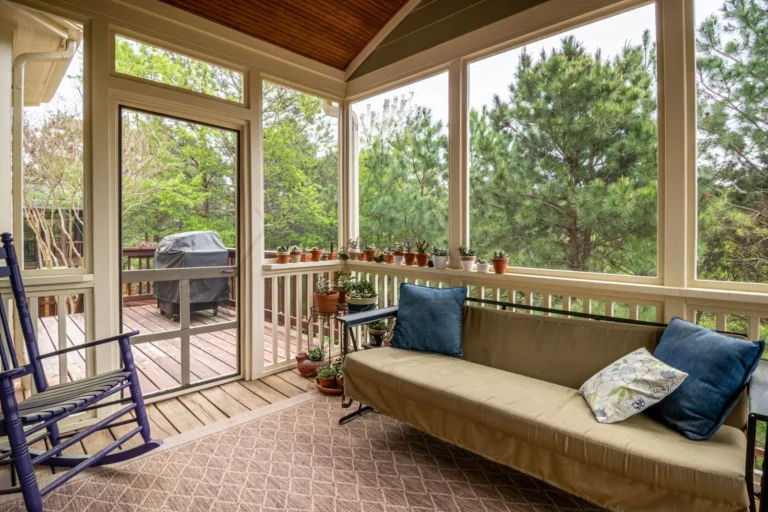
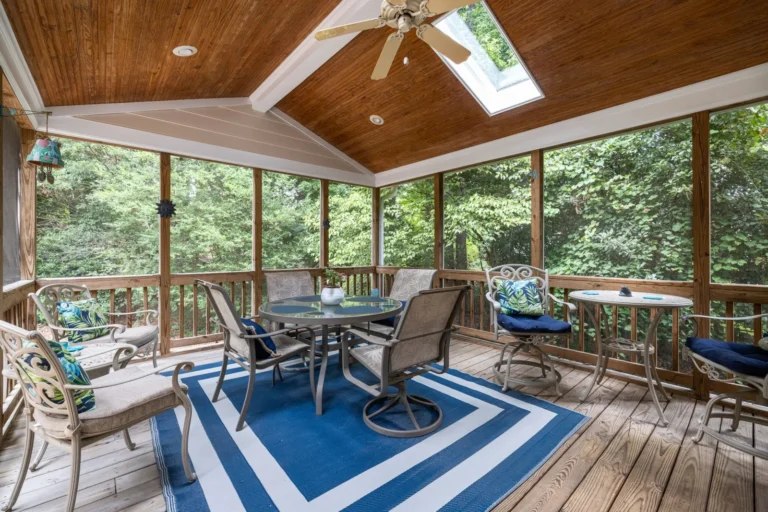
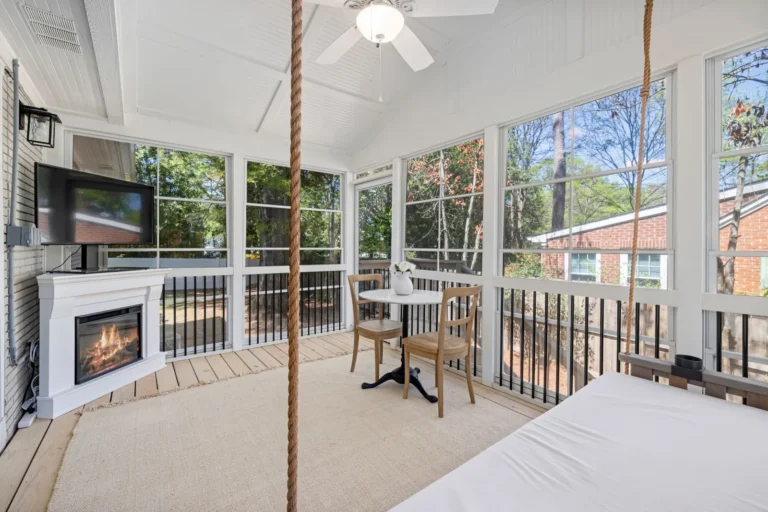
These are the most popular prefab option for a reason. A three-season kit from a manufacturer like Sunspace, TEMO, or Patio Enclosures typically runs $6,000 to $20,000 for the shell, with most mid-size units landing around $12,000 to $16,000. You get screen and glass interchangeable panels, an aluminum frame, and a roof — enough for comfortable use from April through October in most US climates. Expect to pay more for a cathedral or curved-eave roof profile, which adds roughly 10% to 20%.
Photo by haru mio via Pexels
Four-Season Sunroom Kits
If you want the room heated and usable in January, you need a four-season kit with insulated low-E glass and a thermally broken frame. These run $12,000 to $40,000 for the shell and $25,000 to $70,000 fully installed with foundation, electrical, and HVAC tie-in. Brands like Four Seasons Sunrooms and Joyce Manufacturing dominate this tier. The glazing choice matters enormously: stepping from double-pane to triple-pane argon-filled glass can add $3,000 to $8,000 on a typical 12×16 room, and low-E coatings add another layer of cost.
How Square Footage Moves the Price
Size scales cost in a predictable way once you know the kit’s per-square-foot rate. Budget $75 to $150 per square foot for a three-season prefab kit and $150 to $300 per square foot for a four-season kit, materials only. Fully installed, those figures climb to $150 to $300 and $300 to $500 per square foot respectively.
A few common footprints to anchor your planning:
- 8×10 kit (80 sq ft): $6,000–$12,000 shell
- 12×12 kit (144 sq ft): $10,000–$22,000 shell
- 12×16 kit (192 sq ft): $14,000–$28,000 shell
- 16×20 kit (320 sq ft): $20,000–$40,000 shell

Photo by Lucas Craig via Pexels
For a deeper dive on the math behind per-square-foot pricing, see our breakdown of sunroom cost per square foot and the step-by-step on how much a sunroom costs to build.
Kit Materials: Aluminum vs. Vinyl vs. Wood
The frame material shapes both the upfront price and the long-term upkeep, so it is worth deciding before you compare quotes.
- Aluminum: The workhorse of prefab sunrooms. It is strong, low-maintenance, and lets manufacturers offer large glass panels with slim sightlines. Aluminum-framed kits typically carry a slight premium over vinyl but stand up best in high-wind and coastal conditions. Most of the established brands — Patio Enclosures, TEMO, Sunspace — build on extruded aluminum.
- Vinyl (uPVC): Usually the cheapest framing option and essentially maintenance-free, but it does not have aluminum’s structural rigidity, which limits panel sizes and puts a practical cap on how big the room can be. Vinyl kits are most common in small to mid-size three-season units.
- Wood or wood-clad: Rare in true kits because wood is heavy, needs painting, and drives freight costs up. You still see it in custom-hybrid designs where the homeowner wants the sunroom to match a cedar exterior, but expect to pay a meaningful premium for it.
For budget buyers, aluminum is the default recommendation: it is the middle option on price but the best value over a two-decade lifespan.
Hidden Costs That Inflate the Final Bill
The kit is usually 50% to 70% of the true project cost. The rest hides in line items first-time buyers forget to budget. Site preparation — grading, a concrete slab, or footers — commonly runs $3,000 to $8,000. Electrical work to bring a circuit to the room adds $500 to $2,500. Permits and inspections run $300 to $1,500 depending on your municipality, and some areas require an engineer’s stamp on the foundation plan.
The other big variable is labor. Hiring a carpenter or a sunroom specialist to assemble the kit costs $5,000 to $15,000, often more than the DIY route but far less risky if the kit has tight tolerances or your walls are out of square. For a full accounting of the installed price including labor, see our guide to how much a new sunroom costs.
Buying a Prefab Kit vs. Hiring a Full-Service Installer
Many manufacturers sell through dealer-installers rather than direct to homeowners, which blurs the line between “kit” and “turnkey.” Going direct with a DIY kit saves the labor markup but leaves you responsible for code compliance, waterproofing, and any warranty claim that hinges on correct installation — a real risk, since a botched assembly can void a glass warranty.
A full-service sunroom company like Champion or Patio Enclosures usually bundles the kit and installation into one figure, typically $25,000 to $70,000 for a finished four-season room. You pay for convenience and the warranty, but you also offload the two things most likely to go wrong: the foundation and the roof flashing.
Frequently Asked Questions
How much does a prefabricated sunroom kit cost on average?
Most homeowners spend $6,000 to $30,000 on the kit itself, with the national average for a mid-size three-season kit around $15,000. Fully installed, the average project lands between $25,000 and $50,000.
Are prefabricated sunroom kits cheaper than a traditional addition?
Yes. A stick-built addition typically costs $200 to $600 per square foot, while a prefab sunroom kit runs $75 to $300 per square foot. The savings come from pre-engineered components, no custom framing, and shorter on-site labor. According to Angi, kit pricing remains one of the most affordable ways to add conditioned living space.
Do prefabricated sunroom kits add value to a home?
A well-built sunroom can recoup roughly 50% to 60% of its cost at resale, though the return varies widely by climate and local market. Four-season rooms that are heated and cooled by the home’s HVAC tend to appraise higher than three-season porches.
Can I install a prefab sunroom kit myself?
Skilled DIYers can assemble a small three-season kit on an existing slab in a long weekend to a week, but most manufacturers recommend — and some require — professional installation to keep the warranty intact. The U.S. Department of Energy notes that proper flashing and sealing are critical to preventing air leakage and moisture damage.
How long does a prefabricated sunroom kit last?
A quality aluminum or vinyl kit lasts 20 to 40 years with basic upkeep, with the glazing seals and roof typically needing attention before the frame does. Insulated four-season units generally outlast single-pane three-season models.
The Bottom Line
Prefabricated sunroom kits cost significantly less than custom construction, but the honest budget is always the kit price plus foundation, permits, electrical, and either your own time or a contractor’s labor. Expect $6,000 to $40,000 for the shell alone and $25,000 to $70,000 for a finished, code-compliant four-season room. Pin down whether a kit is truly complete, choose your season rating first, and get three quotes before committing — the spread between vendors on an identical footprint is often $5,000 or more.